


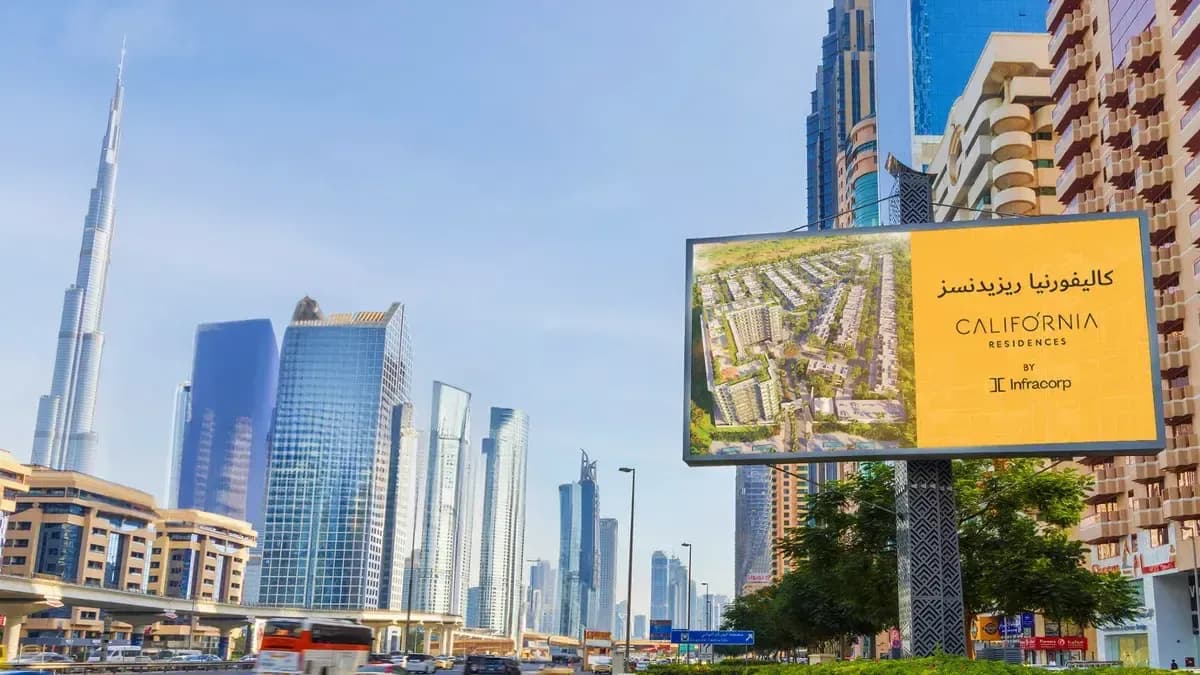
Brand Recall Is Built Before the Customer Is Ready to Buy
People rarely remember a brand because they saw it once. Most of the time, recall is built slowly through repeated exposure, familiar visuals and a sense that the brand is present in the world around them. This is exactly where outdoor advertising becomes so powerful.
A person may pass the same billboard on the way to work, see the same taxi campaign near a mall, notice a lamppost ad in their community or remember a digital screen they saw at the airport. They may not act immediately, but the brand starts to settle in their mind. Later, when they need that product or service, the familiar name is easier to remember.
That is the real strength of OOH Advertising. It does not depend on someone clicking in the moment. It works by making the brand part of people’s daily environment. In a city like Dubai, where residents, tourists, commuters and business travellers are constantly moving, this kind of repeated physical visibility can create strong long-term memory.
Brand recall is not only about being seen. It is about being seen often enough, clearly enough and in the right places.
Why Outdoor Advertising Sticks in People’s Minds
Outdoor advertising has a natural advantage because it exists in the real world. People see it while driving, walking, shopping, travelling or waiting. It becomes part of familiar routines and public spaces, which makes it easier for the brain to store.
Digital ads can disappear in seconds. A person may scroll past them without registering the brand. Outdoor ads behave differently. A billboard on a daily route, a taxi wrap in a busy area or a screen inside a mall has physical presence. It does not need the audience to open an app or search for anything. It simply appears in front of them.
This is why Out of Home advertising is so effective for brands that want to stay top of mind. It creates visibility without feeling overly intrusive. People are not forced to watch a long ad or close a pop-up. They notice the message naturally as part of their surroundings.
Over time, that natural exposure creates familiarity. And familiarity is one of the strongest foundations of brand recall.
Repetition Turns Visibility Into Memory
The biggest reason outdoor advertising builds recall is repetition. When people see the same brand message several times, it becomes easier to remember. This is especially true when the creative is simple, consistent and visually strong.
Dubai’s movement patterns make repetition highly valuable. Many residents take the same roads every day. Office workers pass familiar bridges and junctions. Families visit the same communities, malls and schools. Tourists move between airports, hotels, beaches, attractions and shopping areas. A well-placed outdoor campaign can reach these audiences again and again without asking them to do anything.
A commuter who sees the same billboard every morning may not enquire on day one. But after repeated exposure, the brand name becomes familiar. When they later see the same brand online, hear it in conversation or need the product, recognition happens faster.
This is how outdoor media moves a brand from “I saw this somewhere” to “I know this brand.”
For long-term recall, repetition is not a weakness. It is the strategy.
The Role of Familiar Routes in Brand Memory
Outdoor advertising works beautifully because people live through routines. They drive to work, pass the same junctions, stop at the same traffic lights, visit the same malls and move through familiar districts. A brand that appears along those routes becomes part of the rhythm of daily life.
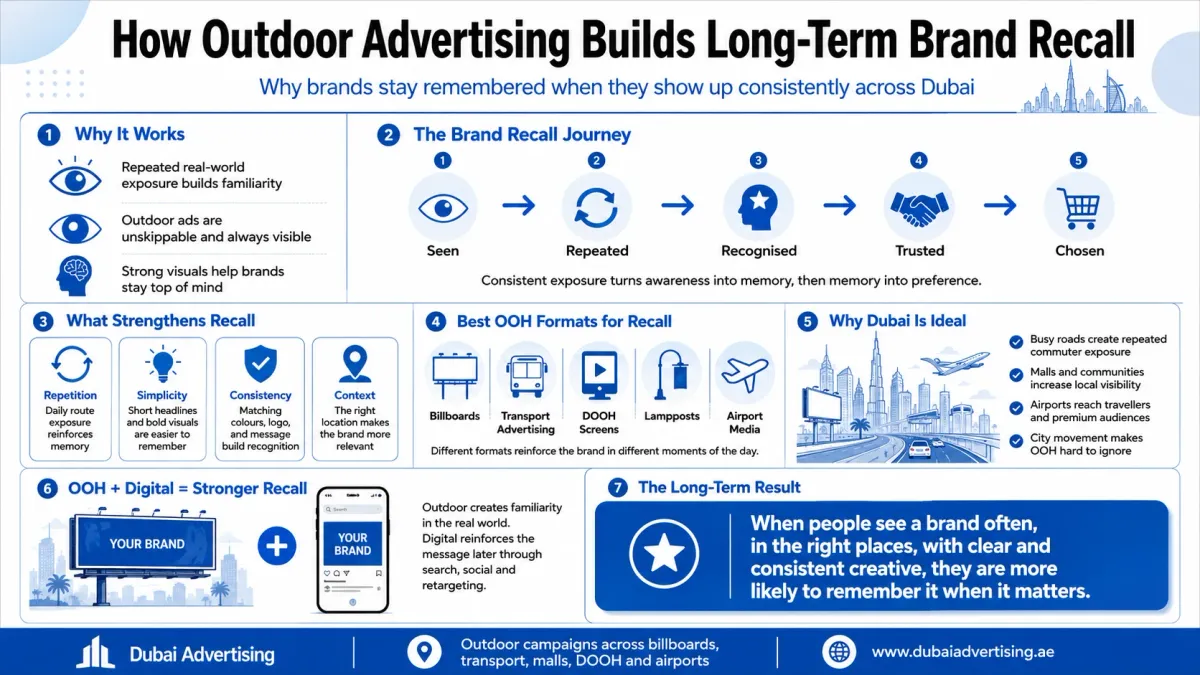
This matters because memory is often linked to place. A person may remember a restaurant because they always see its ad near their office. They may remember a real estate project because it appears along their commute. They may remember a beauty brand because they keep seeing it in the mall. They may remember a tourism or hospitality brand because it appeared on taxis and airport screens during a trip.
The location becomes a mental trigger.
For example, a brand using Transport advertising can appear across different parts of the city, from hotels and malls to airports and business districts. A lamppost campaign can create repeated visibility in a specific community. A billboard can become a recognisable point on a daily route. A bridge banner can reinforce the same message across key commuter corridors.
When people keep seeing the same brand in places they already know, recall becomes stronger.
Simple Creative Is Easier to Remember
Long-term brand recall depends heavily on creative simplicity. Outdoor ads are usually seen quickly, so they need to be easy to understand at a glance. If the creative is too crowded, people may see the ad but forget the brand.
A memorable outdoor campaign usually has one strong idea. It uses a clear headline, a bold visual, a visible logo and a consistent colour palette. The message should be easy to process, even from a distance or while moving.
This is especially important in Dubai, where outdoor environments can be visually busy. Roads, buildings, signs, traffic and movement all compete for attention. A campaign that tries to say too much can disappear into the clutter. A campaign with one clean message is more likely to stick.
The strongest outdoor creative often feels effortless. It does not over-explain. It gives people something simple to remember.
A product image.
A brand colour.
A short phrase.
A recognisable face.
A strong visual style.
A clear promise.
When these elements stay consistent across locations and formats, recall grows faster.
Distinctive Brand Assets Matter
For outdoor advertising to build long-term recall, the brand needs to be recognisable. That recognition can come from a logo, colour, slogan, product shape, mascot, typography, tone of voice or visual style.
The more distinctive the brand assets are, the easier it becomes for people to remember the campaign. If every ad looks like every other ad in the category, recall becomes harder. But if a brand has a unique colour combination, a repeated line, a bold product visual or a consistent design system, people start recognising it before they even read the full message.
This is especially valuable for brands running long-term campaigns across Dubai. A person may see the brand on a billboard one day, a taxi the next week, a mall screen later and a digital ad online after that. If the visual identity is consistent, all those exposures connect in the mind.
That connection is what builds memory.
Outdoor advertising is not only about the space you buy. It is also about the brand cues you repeat.
Outdoor Advertising Builds Trust Alongside Recall
People are more likely to remember brands they trust. Outdoor advertising supports trust because it gives brands a visible public presence. When a company appears in real-world spaces across Dubai, it often feels more established, more active and more credible.
A brand on a premium billboard, an airport screen, a major road, a taxi campaign or a mall placement sends a message beyond the creative itself. It tells people that the brand is investing in the market. It feels present. It feels legitimate.
This is important for categories where trust matters, such as real estate, healthcare, finance, education, luxury, hospitality, technology and automotive. These are not always instant purchase decisions. People may need time before they act. Outdoor advertising keeps the brand visible during that consideration period.
Over time, repeated exposure in trusted public environments can make the brand feel familiar and reliable. That is why recall and trust often grow together.
A remembered brand has an advantage. A remembered and trusted brand has an even bigger one.
Dubai’s Outdoor Landscape Helps Brands Stay Visible
Dubai is a strong market for outdoor advertising because the city is built around visibility and movement. Major roads carry constant traffic. Malls attract shoppers and tourists. Airports welcome international audiences. Taxis move through premium and high-footfall districts. Residential communities create daily local routines. Business areas bring together professionals, investors and decision-makers.
This gives brands many opportunities to build recall across different environments.
A campaign on billboards can create large-scale awareness across major roads. Bridge banners can build repeated exposure on commuter routes. Lampposts can help a brand dominate a specific area. Airport advertising can create premium recall among travellers. DOOH can add motion and flexibility. Transport media can carry the message across the city.
Each format contributes to memory in a different way. The strongest campaigns often use a mix, so the audience sees the brand in more than one context.
The more connected the campaign feels, the stronger the recall becomes.
Transport Advertising Keeps Brands Moving
Transport advertising plays a special role in long-term brand recall because it moves with the audience. Instead of waiting in one fixed location, taxis, buses and other moving formats carry the brand across multiple parts of Dubai.
This makes transport useful for brands that want broad visibility and repeated exposure across different districts. A taxi campaign might be seen near airports, hotels, malls, beaches, business districts and residential communities on the same day. A bus campaign can create route-based familiarity across large parts of the city.
The movement itself helps recall. People may see the same brand in different places, which makes it feel more active and widely present. This is useful for product launches, tourism campaigns, apps, restaurants, retail brands, property projects and service-based businesses that want to stay visible across the city.
For transport advertising to work well, the creative needs to be simple and recognisable. People may see the ad from different angles and distances, so the brand name, colour and main message need to be clear.
A moving campaign should be easy to recognise even before the audience reads every word.
DOOH Helps Brands Refresh Memory Without Losing Consistency
Digital Out of Home allows brands to stay visible while keeping the campaign fresh. This is useful for long-term recall because audiences can see different versions of the same brand message over time.
A DOOH campaign might use the same brand colours and slogan but rotate product benefits, seasonal offers, countdowns, videos or location-based messages. This keeps the brand familiar without making the campaign feel repetitive in a boring way.
For example, a restaurant can use the same visual identity while promoting breakfast in the morning, lunch in the afternoon and dinner in the evening. A retail brand can rotate collections while keeping the campaign look consistent. A tourism brand can show different experiences under one recognisable theme.
pDOOH can make this even smarter by helping brands deliver more flexible digital outdoor campaigns across relevant locations and timings.
The key is balance. The campaign should change enough to stay interesting, but remain consistent enough to be remembered.
Long-Term Recall Needs Consistent Messaging
One of the biggest mistakes brands make is changing their message too often. If every campaign looks and sounds completely different, audiences may not connect the dots. Long-term recall needs consistency.
This does not mean a brand must run the same creative forever. It means the brand should keep recognisable elements across campaigns. The logo, colour palette, tone, slogan, product style or visual world should feel connected.
Consistency helps people build a mental file for the brand. Every new exposure adds to that file instead of starting from zero.
For example, a real estate developer can maintain the same premium visual style across project launches. A restaurant group can use consistent food photography and tone. A beauty brand can repeat colours, packaging and tagline. A service brand can keep a simple, recognisable promise across all placements.
Outdoor advertising gives brands the scale to repeat these cues publicly. That repetition turns campaigns into memory.
Outdoor Advertising Makes Digital Work Harder
Outdoor advertising often improves digital performance because it creates recognition before the click. When people see a brand in the real world and later encounter it online, they are more likely to notice it. The digital ad feels less random because the brand is already familiar.
This is valuable for long-term recall. A billboard may introduce the brand. A taxi ad may reinforce it. A mall screen may remind the person again. Later, when the same brand appears on search, social media or display advertising, the audience recognises it faster.
The outdoor campaign creates memories. Digital channels can then turn that memory into action.
Brands can strengthen this connection by keeping outdoor and digital visuals aligned. The same headline, colour, product image or campaign phrase should appear across both. QR codes, short URLs, hashtags, landing pages and retargeting can also connect the offline and online journey.
Outdoor advertising is not separate from digital. It gives digital something stronger to build on.
Brand Recall Grows When Outdoor Feels Relevant
Repetition alone is not enough. The message also needs to feel relevant to the audience and location. A campaign that appears in the right environment is easier to remember because it makes sense in that moment.
A food delivery ad near residential areas feels useful. A luxury brand in a premium mall feels natural. A hotel campaign near the airport feels timely. A fitness brand near communities and wellness destinations feels relevant. A real estate campaign near business hubs and affluent districts feels credible.
Location gives the message meaning. When the audience sees the right brand in the right place, recall becomes stronger because the context supports the memory.
This is why media planning is so important. A campaign should not simply chase the most visible sites. It should choose locations that match the brand’s audience, category and objective.
Long-term recall is built through repeated relevance, not random exposure.
Outdoor Advertising Helps Brands Become Part of the City
The best outdoor campaigns do more than promote a message. They become part of the city’s visual memory. People begin to recognise them on roads, in malls, at airports, on taxis and around neighbourhoods. Over time, the brand feels like it belongs.
This is especially powerful in Dubai, where the city itself is highly visual. Brands that show up confidently in public spaces can become associated with Dubai’s energy, movement, ambition and lifestyle.
A strong outdoor presence can help a brand feel bigger than its category. It can make a new brand look established. It can make an established brand feel dominant. It can make a local brand feel close to the community. It can make an international brand feel active in the market.
When people see a brand repeatedly across the city, it becomes familiar even before they buy. That familiarity is the foundation of long-term recall.
How Different Formats Build Recall Differently
Different outdoor formats support recall in different ways.
Billboards are powerful for scale and big visual impact. They are ideal for creating broad awareness and making the brand feel visible across major roads. Bridge banners are strong for repeated exposure along daily commuter routes. Lampposts help brands own specific neighbourhoods or roads through frequency. Mall media gives audiences more time to absorb the message in shopping and leisure environments. Airport advertising builds premium recall among travellers, tourists and business audiences. DOOH adds motion and allows campaigns to refresh while staying recognisable. Transport advertising spreads visibility across multiple districts and makes the brand feel active citywide.
The best format depends on the brand’s goal. A launch campaign may need scale. A local campaign may need repetition in one area. A premium campaign may need prestigious locations. A tourism campaign may need airport, taxi and mall visibility. A long-term brand campaign may need a balanced mix that builds familiarity across several touchpoints.
For strong recall, the format mix should create repeated exposure without confusing the audience.
Creative That Builds Long-Term Recall
Creative for long-term recall should be clear, distinctive and easy to recognise. The goal is not to explain everything. The goal is to leave a memory.
A strong outdoor creative usually focuses on one main message. It uses bold colours, simple typography, a visible logo and a visual that people can process quickly. The best campaigns also have a consistent idea that can stretch across multiple formats.
For example, a campaign can use the same headline across billboards, taxis and digital screens, while adjusting the layout for each format. A product campaign can keep the product image large and recognisable. A brand campaign can repeat a slogan until it becomes familiar. A service campaign can use one clear promise across all outdoor placements.
The creative should also avoid clutter. Too many claims, icons, phone numbers, social handles and messages can weaken recall. People remember simple ideas more easily than crowded information.
If you want people to remember your brand, give them something clear to remember.
Measuring Brand Recall From Outdoor Campaigns
Brand recall can be measured in several ways, depending on the campaign objective. Brands can look at search uplift, website traffic, direct visits, social mentions, QR scans, promo code use, enquiries, footfall, surveys, brand lift studies and customer feedback.
For long-term campaigns, changes may appear gradually. More people may start searching the brand name. Sales teams may hear more prospects mention the campaign. Website traffic may rise from areas where the outdoor campaign is active. Customers may recall the billboard, taxi ad or mall screen when asked how they heard about the brand.
It is important to measure outdoor advertising over the right timeline. Brand recall is not always instant. It builds through exposure and memory. A campaign that runs consistently across the right locations can continue influencing decisions long after someone first sees it.
The value of outdoor is often seen when a customer chooses the familiar brand over an unfamiliar one.
Why Dubai Advertising Helps Brands Stay Remembered
Building long-term brand recall takes more than buying space. It requires the right locations, formats, creative approach, timing and consistency. Dubai Advertising helps brands plan outdoor campaigns across billboards, building wraps, taxi advertising, bus advertising, MUPIs, lampposts, bridge banners, malls, DOOH, airports and more.
Whether a brand wants to build awareness, launch a product, dominate a community, reach tourists, support digital campaigns or stay top of mind in a competitive market, the right outdoor strategy can make the brand easier to remember.
Brands can explore available formats, review previous campaigns on our work, browse helpful planning resources in the academy, or speak to the team through the contact page.
In a city as visible and fast-moving as Dubai, the brands that stay remembered are the ones that keep showing up with clarity, consistency and confidence.
FAQs
Q1. How does outdoor advertising build brand recall?
Outdoor advertising builds brand recall through repeated real-world exposure. When people see the same brand across roads, malls, taxis, airports and public spaces, it becomes more familiar and easier to remember.
Q2. Why is repetition important in OOH advertising?
Repetition helps move a brand from short-term attention into long-term memory. Commuters, shoppers and tourists often see the same outdoor messages multiple times, which strengthens recognition over time.
Q3. Which outdoor formats are best for long-term brand recall?
Billboards, bridge banners, lampposts, transport advertising, airport media, mall screens and DOOH can all build recall. The best mix depends on the audience, location and campaign goal.
Q4. Can outdoor advertising improve digital campaign performance?
Yes. Outdoor advertising can make digital ads more effective because audiences are more likely to notice and engage with brands they already recognise from real-world exposure.
Q5. Can Dubai Advertising help build long-term brand recall?
Yes. Dubai Advertising can help brands plan outdoor campaigns across billboards, taxis, buses, malls, airports, DOOH, bridge banners, lampposts and other formats to build stronger brand recall across Dubai.
Ready to Make Your Brand Impossible to Forget?
Long-term brand recall is built through visibility, repetition and consistency. Dubai Advertising can help your brand appear in the right places across the city, so people do not just see it once, they remember it.
Contact Dubai Advertising today and let’s build an outdoor advertising campaign that keeps your brand top of mind across Dubai.
Get a Tailored Quote Now to Launch Your Outdoor Campaign!
Your audience is out there, on roads, at airports and across screens. Every moment of delay is a moment of lost visibility. So, why wait? Request a personalised quote now to plan and roll out your OOH advertising Dubai campaign at full speed.
We craft a bespoke strategy that delivers maximum impact across the city's most strategic locations. From concept to execution, Dubai Advertising gets your campaign up and running faster than ever.