


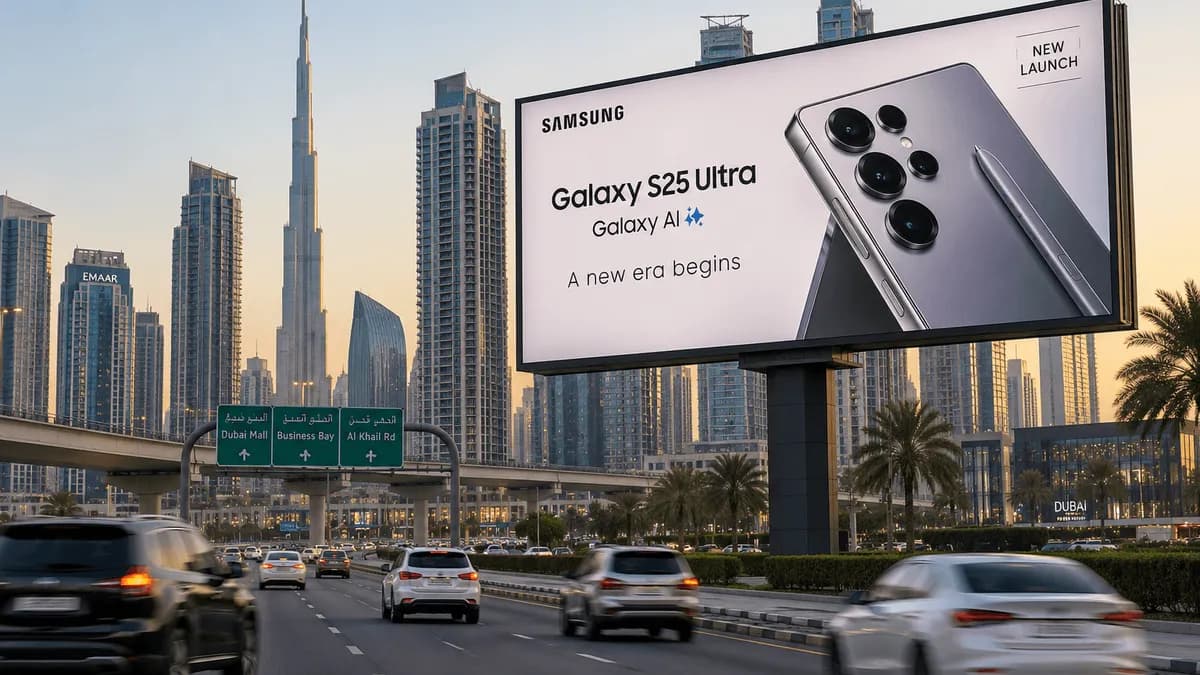
Launching a new product requires visibility. People need to see it, understand what it offers, and remember the brand behind it.
Outdoor advertising can help create that awareness in the places people visit every day. In the UAE, brands can use roadside media, digital screens and large-format placements to introduce products across busy commercial and residential areas.
Here is how brands can make billboards work effectively during a new product launch.
Start With a Clear Product Launch Objective
Every campaign should begin with a defined goal.
A brand may want to introduce an entirely new product, announce that it is now available in the UAE or encourage people to visit a store or website.
Common objectives include:
- Building awareness before launch
- Announcing a launch date
- Introducing a new product name
- Highlighting one key feature
- Driving visits to stores or showrooms
- Supporting an online launch
- Promoting a limited-time launch offer
The objective influences the creative and media plan.
Choose Locations That Match the Target Audience
Location is one of the most important decisions in billboard advertising.
The busiest location is not automatically the most relevant. Brands should consider who regularly travels through an area and whether those people match the intended customer.
Dubai offers a wide range of outdoor environments. Sheikh Zayed Road can provide prominent visibility along a major city route. Business Bay and DIFC can be relevant for professional audiences. Retail-focused campaigns may benefit from media close to shopping destinations.
A product launch should therefore be planned around audience movement rather than simply selecting the largest available site.
Consider the Customer Journey
Brands should also think about what happens after someone sees the advert.
A new restaurant concept could advertise near its opening location. A car manufacturer could use media around major roads and automotive destinations. A fashion or beauty brand may choose locations close to malls and retail districts.
Placing the message near a relevant destination can make the campaign more useful to the audience.
Keep the Product Launch Message Simple
A billboard has limited time to communicate.
Trying to explain every product feature can make the creative difficult to understand. The launch message should focus on what people need to know first.
This could be:
New product. Key benefit. Brand. Launch date.
A smartphone launch, for example, may focus on the product image and one defining feature. Detailed technical specifications can be communicated through the website, store or other digital channels.
Outdoor creative works best when the main idea can be understood within seconds.
Make the New Product Easy to Recognise
If the purpose of the campaign is to introduce a product, the product should have a clear role in the creative.
Large, high-quality imagery can help audiences recognise its appearance, packaging or distinctive features.
Branding should also be easy to identify.
A new drink might use the bottle or can as the main visual. A new vehicle could show the model clearly. A fashion launch may focus on a hero product or campaign image.
This creates a visual memory that audiences may recognise later in stores, online or through other advertising.
Use Teaser Billboards Before the Launch
Brands do not always need to reveal everything immediately.
A teaser campaign can build curiosity in the days or weeks before a product becomes available.
The first creative could show a date, visual clue or short message without revealing the full product. The next phase can then introduce the product and explain what is launching.
This approach works best when there is a genuine reason for audiences to be interested in the reveal.
Teasers should remain simple. Making the message too vague can leave people confused rather than curious.
Time the Campaign Around the Launch Date
Timing can influence how much impact an outdoor campaign creates.
Launching too early may mean people forget the message before the product becomes available. Starting too late can miss the opportunity to build anticipation.
Brands can structure activity into phases:
- Pre-launch – Build curiosity or introduce the launch date.
- Launch – Reveal the product and communicate the main message.
- Post-launch – Maintain awareness and promote availability.
Connect Outdoor Advertising With Other Channels
Product launches often involve several customer touchpoints.
A person may first see the product on a Dubai billboard, encounter it later on social media and then search for it online.
Keeping the same visual identity across these channels makes the campaign easier to recognise.
Brands can align outdoor creative with:
- Social media
- Online video
- Search advertising
- Influencer activity
- Retail displays
- PR
- Events and activations
- Connected TV
The billboard does not need to communicate every detail. Its role can be to make the product memorable enough for audiences to recognise it elsewhere.
Give People a Clear Next Step
Some launch campaigns need an action from the audience.
This could be visiting a website, finding a nearby store, booking a test drive or remembering a launch date.
The call to action should be short.
Website addresses and QR codes can be useful in environments where people have enough time to engage. On fast-moving roadside placements, lengthy URLs or complicated instructions may be difficult to use.
Measure the Campaign Against the Original Goal
Measurement should connect directly to the campaign objective.
Depending on the launch, brands may look at:
- Estimated audience reach
- Website traffic
- Branded search activity
- Store visits
- Enquiries
- Sales
- QR code interactions
- Social engagement
- Brand awareness studies
No single metric will suit every product launch.
A campaign designed primarily to build awareness should be assessed differently from one designed to generate immediate store visits.
Get a Tailored Quote Now to Launch Your Outdoor Campaign!
Your audience is out there, on roads, at airports and across screens. Every moment of delay is a moment of lost visibility. So, why wait? Request a personalised quote now to plan and roll out your OOH advertising Dubai campaign at full speed.
We craft a bespoke strategy that delivers maximum impact across the city's most strategic locations. From concept to execution, Dubai Advertising gets your campaign up and running faster than ever.