


Technology may live on screens, inside apps and behind cloud platforms, but some of its strongest marketing moments happen in the physical world.
A giant smartphone displayed above a busy road, a cybersecurity message positioned near a business district or a digital screen reacting to the weather can make a technology brand feel instantly relevant. It takes a product that may be difficult to explain and turns it into something people can see, understand and remember within seconds.
This is why technology companies continue to invest in OOH Advertising, even when much of their customer journey happens online. Billboards give tech brands scale, public visibility and a sense of confidence that is difficult to recreate through a small mobile advert.
In a fast-moving city such as Dubai, billboard advertising can help technology companies launch products, build credibility and connect with consumers, professionals, investors and business decision-makers. The strongest campaigns combine simple creative thinking with the flexibility of modern digital media.
Why Billboard Advertising Works So Well for Technology Brands
Technology companies often sell ideas that are invisible.
A software platform cannot be held. A cloud service cannot be placed in a shop window. Cybersecurity, artificial intelligence and financial technology can be valuable, yet difficult to communicate without technical language.
Billboard advertising encourages brands to simplify those ideas. Instead of listing every product feature, the advert must focus on the one benefit that matters most.
A cloud platform might promise faster collaboration. A cybersecurity company may focus on protecting customer data. A payment app could promote easier international transfers. A smartphone campaign may highlight its camera, battery or design.
This simplicity helps people understand the value of the product before they visit the website or download the app.
Out of Home advertising also gives digital-first brands a physical presence. When customers see a technology company on a major road, at an airport or across a business district, the brand begins to feel more established. This can be particularly valuable for start-ups, fintech companies, software providers and new platforms entering the UAE.
Turning Product Launches into Citywide Moments
Technology brands understand the power of anticipation. New smartphones, gaming devices, wearables and software products are often teased before their official release.
Billboards can make these launches feel larger than a standard product announcement. A striking visual on Sheikh Zayed Road or a premium digital screen near a major shopping district places the product at the centre of public attention.
The first stage of a campaign may show only part of the product, a launch date or a short line that creates curiosity. As the release gets closer, the message can reveal more information. The final stage can introduce the product name, main benefit and availability.
This gradual approach helps build familiarity before the product reaches stores or online platforms. People may see the campaign during their daily commute, encounter it again on social media and later recognise the product while shopping.
Brands can explore billboard advertising in Dubai to understand how large-format placements can support product launches across major roads and high-traffic locations.
One Feature Is Often Stronger Than Ten
Technology companies are understandably proud of their products. Months or years may have gone into developing the software, hardware or service. This can make it tempting to fit every feature into one advertisement.
A billboard rarely needs that much information.
People travelling past an outdoor advert have limited time to understand it. Even in pedestrian areas, a crowded design can weaken the message. The strongest technology campaigns select one clear feature and build the entire creative idea around it.
A smartphone brand could focus on night photography. A laptop company may highlight battery life. An electric vehicle platform could promote charging range. A business software provider might communicate the number of hours it saves each week.
Once the audience understands the main benefit, other channels can provide the detail. The billboard creates interest, while the website, app, retail experience or sales team continues the conversation.
This approach also makes the creative easier to remember. One strong message has a better chance of staying with the audience than a long list of technical specifications.
Minimalist Design Helps Technology Feel Modern
Many successful technology billboards use clean layouts, large product images and very little text. This style reflects the qualities that tech brands often want to communicate: innovation, confidence, simplicity and precision.
A minimalist design does not mean the campaign lacks creativity. It means every visual element has a purpose.
The product should remain visible from a distance. The headline should be short enough to understand quickly. The logo must be easy to recognise, and the background should support readability rather than compete for attention.
Strong contrast is particularly important on roadside billboards. Small text, complicated diagrams and detailed user interfaces can disappear when viewed from a moving vehicle.
Technology companies can use the physical scale of the billboard to make the product feel desirable. A smartphone photographed with careful lighting, a beautifully designed device or a recognisable app interface may be enough to carry the campaign.
The confidence to leave empty space can make the message feel more premium.
Building Trust for Digital-First Brands
A new app or online platform may face an important challenge: people cannot always tell whether the company is established, reliable or safe.
This concern is especially relevant for fintech, cryptocurrency, cybersecurity, artificial intelligence and software-as-a-service brands. Customers may be asked to share payment details, company data or personal information. Before they take that step, they need to trust the name behind the product.
A visible Outdoor Advertising campaign can help create that reassurance. When a digital company appears across respected roads, airports and business locations, it demonstrates that the brand is investing in the market.
The advert itself should support that sense of credibility. Clear wording, professional design and a realistic promise will usually work better than exaggerated claims.
For business-to-business technology companies, premium outdoor placements can also influence how the brand is perceived by investors, potential partners and senior decision-makers. The campaign may not explain the entire platform, but it can make the company familiar before an important meeting, event or sales conversation.
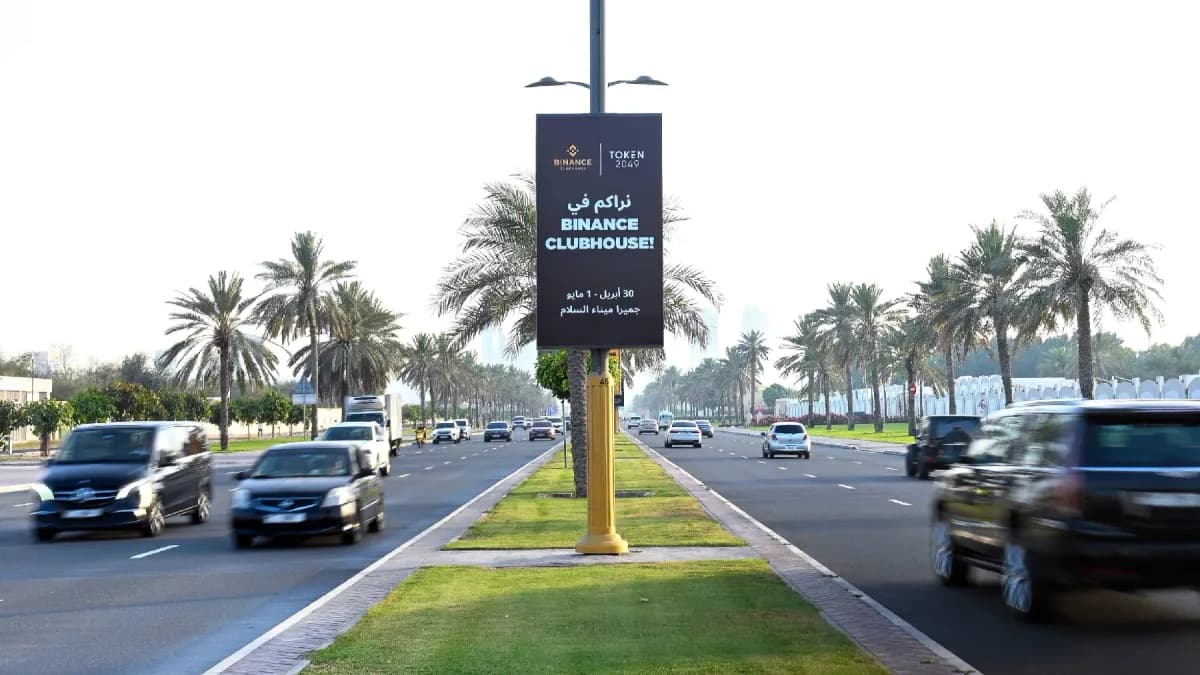
Dubai Advertising’s DWF Labs outdoor campaign for TOKEN2049 shows how a digital-native company can use real-world media to create visibility around a major industry event.
Reaching Business Decision-Makers in the Right Places
Enterprise technology brands rarely need to reach everyone. They need to reach the people who influence software purchases, technology budgets and business strategy.
This makes location planning extremely important.
Billboards near DIFC, Business Bay, Dubai Internet City, Dubai Media City and other commercial areas can help technology brands reach professionals during their regular journeys. Airport advertising can connect with corporate travellers, investors and international executives. Placements near exhibitions and conference venues can support campaigns around major technology events.
A cybersecurity company may focus on roads used by business leaders. A cloud platform might advertise close to commercial districts. A payment service could prioritise airports, malls and locations with a strong concentration of international visitors.
The message should match the audience’s needs. Senior decision-makers are unlikely to stop and read a technical explanation. A clear business outcome, such as reducing risk, improving productivity or simplifying operations, will be easier to absorb.
Brands planning activity around major conferences can review Dubai’s 2026 events and the best times to advertise.
Making Digital Products Feel Tangible
People often find physical products easier to understand because they can see their size, design and purpose. Software and digital services require a slightly different approach.
Billboards can make these services feel tangible by showing the real-world result rather than the technology behind it.
An accounting platform might show a business owner leaving work on time. A translation app could display two people communicating easily. A delivery platform might focus on the moment an order arrives. A collaboration tool could show a team completing a project from different locations.
These human situations make the benefit easier to recognise.
The campaign does not need to explain every technical process. Customers usually care more about what the technology allows them to do. When a billboard focuses on a relatable outcome, the product becomes easier to understand and more appealing.
Connecting Billboard Views with Online Action
A billboard campaign may happen outdoors, but the next step usually takes place on a phone.
Someone who sees an interesting technology advert may search for the brand, visit the website, download the app or look for a demonstration. This behaviour makes outdoor advertising a valuable starting point for digital engagement.
The brand name must be easy to remember and spell. A complicated company name or long web address may be difficult to recall after the viewer has passed the advert.
Short URLs can work well, particularly for new product launches. QR codes may be suitable in locations where people have time to stop, such as shopping malls, airports, metro stations and pedestrian areas. They are less practical on fast-moving roadside placements.
A technology campaign may also use a promotional code, recognisable hashtag or specific search phrase. These elements can help connect outdoor exposure with online activity.
The landing page should continue the same campaign message. When customers scan or search, they should immediately recognise the headline, colours and product they saw on the billboard.
This creates a smoother journey from awareness to action.
Using Digital Billboards to Show Technology in Motion
Static billboards are excellent for one bold visual, while digital screens give technology brands the ability to demonstrate movement and change.
A digital campaign can show how an app works, rotate through product features or present several use cases. A smartphone may appear to turn, unfold or reveal its camera. A gaming campaign can use dramatic animation to create excitement. A financial platform might show transactions moving between cities.
Digital Out of Home advertising also allows technology companies to update creative without replacing printed artwork. Launch dates, offers, event messages and product availability can be changed during the campaign.
The creative should still be simple. Digital screens can support motion, but they should not become miniature television adverts filled with fast transitions and small text.
A clear opening frame, one central idea and a recognisable final brand image will help the message remain understandable even when someone sees only part of the sequence.
Brands comparing available options can read more about digital and static billboards in Dubai.
Creating Shareable 3D Billboard Experiences
Three-dimensional digital billboards have become popular with technology brands because they can make a product appear to move beyond the screen.
A device might look as though it is floating above a building. A character from a game may appear to step into the street. A product could rotate inside a digital space that creates the illusion of depth.
These campaigns can attract attention from people at the location and from audiences online. When the idea is visually impressive, viewers may record the display and share it through social media. This gives the campaign additional reach beyond the physical media placement.
The concept needs to suit the brand. A dramatic 3D effect can be valuable for a gaming launch, smartphone or entertainment platform. It may feel unnecessary for business software that needs to communicate reliability and clarity.
The location and viewing angle also matter. Anamorphic creative is usually designed for a specific viewpoint. The effect may become weaker when the audience approaches from another direction.
A strong 3D campaign begins with the billboard location, technical specifications and audience flow. The creative should be designed for the space rather than adapted from an existing video at the last moment.
Using Dynamic Content to Stay Relevant
Technology brands move quickly. Product updates, offers and market conditions may change during the campaign period. Digital billboards give advertisers the flexibility to respond.
A food delivery app could adjust its message around lunchtime. A navigation platform might reference traffic conditions. A cloud service may display a business-focused message during weekday commuting hours and a recruitment message during evening periods.
Weather can also influence creative. A home technology brand could promote cooling solutions during hotter periods. A mobility app may adapt its message when conditions affect travel.
This is where programmatic DOOH can become valuable. Programmatic buying allows campaigns to run during selected times or according to approved data signals, depending on the available inventory and network.
The technology behind the delivery should serve a clear creative purpose. Changing a message because the system allows it does not automatically improve the campaign. The adjustment should make the advert more useful, timely or relevant to the audience.
Supporting Major Technology Events
Dubai hosts exhibitions, conferences and industry gatherings that attract technology leaders from around the world. These events create valuable opportunities for outdoor campaigns.
A brand can begin communicating with delegates before they reach the venue. Airport screens may welcome international visitors. Billboards on routes towards the event can build recognition. Transport formats can continue the message across hotels, business districts and exhibition areas.
During the event, the brand may promote its stand, keynote session, product demonstration or partnership. After the event, the campaign can shift towards a clearer call to action, such as booking a meeting or requesting a trial.
The strongest event campaigns consider the full visitor journey. A delegate may see the brand at the airport, inside a taxi, on a roadside billboard and again near the venue.
This repeated visibility makes the company easier to remember when the delegate enters a crowded exhibition hall filled with competing messages.
Transport Advertising Keeps Tech Brands Moving
Technology products are often designed around mobility. People use apps, payment platforms, streaming services and navigation tools while moving around the city.
Transport advertising allows technology companies to place their message within that same daily movement. Taxis, buses and other transport formats carry the campaign through residential areas, shopping districts, commercial zones and tourist locations.
A ride-hailing app may use taxi advertising to create an interesting contrast within the transport environment. A payment platform can reach shoppers and commuters. A telecommunications company may promote mobile plans across routes used by residents and visitors.
Transport media can also extend the reach of a fixed billboard campaign. Someone might see a product launch on a large roadside display and encounter the same visual later on a taxi. This repetition helps reinforce recognition across different parts of the city.
Dubai Advertising’s iVolt Auto taxi advertising campaign demonstrates how mobility and technology brands can build visibility through moving media.
Airport Advertising Connects Tech Brands with Global Audiences
Airports are highly relevant environments for technology advertising because travellers rely heavily on digital services throughout their journeys.
Passengers may need connectivity, payment services, accommodation apps, cybersecurity tools, entertainment platforms and transport solutions. This makes airport advertising useful for brands offering products that solve immediate travel needs.
Airports also attract business travellers, frequent flyers and international decision-makers. Technology companies can use airport advertising to build credibility and introduce their services to audiences from several markets within one location.
Messaging should reflect the passenger’s stage of the journey. Arrivals areas can promote local connectivity, transport and services in Dubai. Departure lounges may suit entertainment, financial products or global software platforms. Business lounges can help enterprise brands reach premium audiences with longer dwell times.
A clear call to action works particularly well in gate and lounge areas, where passengers have time to use their phones.
Lampposts and Bridge Banners Build Frequency
Large billboards can lead a campaign, while smaller repeated formats can strengthen it across selected areas.
Lamppost advertising allows technology companies to display a series of messages along the same road. Each lamppost can reveal a different product feature or continue a simple visual sequence.
This format can work well near business districts, exhibitions, technology parks and retail locations. The repetition helps the brand become familiar during a regular journey.
Bridge banner advertising offers wider visibility across busy roads and junctions. It can support major product announcements, app launches and event campaigns where the brand needs a bold city presence.
Unipole advertising can provide strong roadside impact, especially when the product visual is clear and the headline remains short.
The media plan should give every format a role. The billboard might create fame, lampposts can build repetition and transport media can expand coverage across the city.
Combining Outdoor Media with Digital Retargeting
Technology brands can connect outdoor advertising with digital media planning.
A billboard campaign can create the initial awareness, while mobile, social or search advertising reinforces the message later. Someone who notices a new app outdoors may recognise its digital advert the next time it appears online.
Location-based digital campaigns can also be planned around areas where the outdoor media is running, subject to privacy requirements and platform capabilities. This allows the brand to support physical visibility with more detailed information on mobile devices.
Search activity is another important signal. Memorable outdoor campaigns often lead people to search for the brand name or product. Businesses can monitor changes in branded searches, direct website traffic and app store visits during the campaign period.
The goal is not to treat outdoor and digital as separate worlds. The billboard creates attention at scale, while digital channels make it easier for customers to explore and respond.
Designing Calls to Action for Technology Campaigns
Tech advertising often needs the audience to do something: download an app, visit a website, request a demonstration or sign up for a trial.
The call to action should be realistic for the location.
A roadside billboard could use a memorable instruction such as “Search [brand name]” or “Available now”. A mall screen may include a QR code leading to a product demonstration. A gate-area advert can encourage travellers to download an app while waiting.
Too many instructions can create confusion. An advert that asks people to scan, call, follow, search and visit a store is unlikely to produce a clear response.
Choose the action that moves the customer naturally to the next stage. Awareness campaigns may only need the brand name and product category. Performance campaigns should offer one direct and easy step.
Measuring the Effectiveness of Tech Billboard Campaigns
Technology companies are used to detailed digital reporting, so measurement is often an important part of the outdoor media conversation.
Billboard campaigns can be evaluated through estimated impressions, reach, frequency, location data and media delivery reports. Digital screens may provide information about when and how often the creative played.
Online activity can provide additional evidence. Brands can monitor direct website visits, branded searches, app downloads, landing page sessions and QR code scans.
Promotional codes can help connect offers with specific locations or campaign periods. Surveys can measure brand awareness, recall and changes in perception before and after the campaign.
Technology brands may also compare activity in areas exposed to the campaign with areas where the advertising did not run. This can reveal differences in searches, downloads or enquiries.
Measurement should be planned before the campaign begins. The brand must decide whether success means awareness, traffic, registrations, sales or business leads. The selected media, creative and reporting approach should support that objective.
Common Mistakes Tech Brands Should Avoid
The first mistake is writing the billboard like a product page. Long explanations and technical language can make the message impossible to understand within the available viewing time.
Another common problem is shrinking a digital advert and placing it on a billboard. Outdoor creative needs to be designed for physical distance, traffic speed and the surrounding environment.
Some technology campaigns focus heavily on innovation while forgetting the customer benefit. A feature may be technically impressive, but the audience still needs to know how it improves their life or business.
QR codes are sometimes placed on roadside billboards where nobody can scan them safely. They are better suited to pedestrian areas, malls, transport waiting zones and airports.
Location selection can also weaken the campaign. A premium site is valuable when the right audience passes through it. The largest billboard is not automatically the strongest option for every technology brand.
Finally, inconsistent branding can reduce recognition. The outdoor advert, website, app store page and social campaign should look and sound connected.
Building a Strong Tech Billboard Strategy in Dubai
A successful campaign begins with one clear objective. The brand may want to launch a product, introduce itself to the UAE, reach business decision-makers or drive app downloads.
The audience should then guide the location. Consumer technology brands may focus on shopping destinations, residential routes and high-traffic roads. Enterprise platforms may prefer business districts, airports and conference environments.
The creative should communicate one memorable benefit. Product images, typography and motion must be tested at the real viewing distance.
The media format should support the campaign idea. Static billboards can deliver continuous visibility. Digital screens offer flexibility and movement. Transport media expands coverage. Lampposts build frequency, while airports reach international and premium audiences.
Timing also matters. Technology launches may be planned around events, shopping periods or major industry announcements. Booking early provides more location options and enough time for approvals and production.
Brands can review billboard advertising costs in Dubai and explore the available outdoor advertising formats before building a campaign plan.
Technology Feels Bigger When the City Can See It
The technology industry changes quickly, but people still respond to clear ideas, memorable images and brands that show confidence.
Billboards allow technology companies to leave the limits of the screen and become part of the city. They can turn a product release into a public event, make an unfamiliar platform feel credible and guide people towards an online action.
Dubai provides the audience, movement and modern media infrastructure needed for these campaigns. From large roadside displays and digital screens to taxis, airports, bridge banners and lampposts, technology brands can build a presence that follows customers throughout their day.
The strongest campaigns do not use technology simply to appear futuristic. They use it to communicate a useful idea in a way that feels immediate, simple and exciting.
Frequently Asked Questions
Q1. Why should technology brands use billboard advertising?
Billboards help technology brands reach large audiences, build recognition and create a physical presence in the market. They are particularly useful for product launches, app promotions, fintech services, cybersecurity companies and business software providers.
Q2. What type of billboard is best for a tech product launch?
The right format depends on the campaign. Static billboards provide constant visibility, while digital billboards allow animation, changing messages and countdowns. Major launches may combine both formats across several locations.
Q3. Can billboard advertising increase app downloads?
Yes. A memorable outdoor campaign can encourage people to search for the app or visit the brand’s website. QR codes, short URLs and promotional codes can support downloads when they are used in suitable locations.
Q4. Where should B2B technology companies advertise in Dubai?
B2B technology brands can consider business districts, airports, conference venues and major commuting routes. Areas near DIFC, Business Bay, Dubai Internet City and Dubai Media City may help reach professionals and corporate decision-makers.
Q5. How can tech brands measure billboard campaign results?
Brands can review estimated reach, impressions, QR code scans, website traffic, branded searches, app downloads, enquiries and brand recall. Measurement should be selected according to the main campaign objective.
Launch Your Next Technology Campaign Across Dubai
Whether you are introducing a new device, launching an app, promoting a SaaS platform or building trust for a digital-first company, Dubai Advertising can help you plan a campaign that people notice and remember.
Our team can support your campaign across billboards, digital screens, airports, taxis, buses, bridge banners, lampposts, unipoles, malls and other high-impact locations throughout Dubai.
Contact Dubai Advertising or get started with your outdoor advertising campaign and take your technology brand beyond the screen.
Get a Tailored Quote Now to Launch Your Outdoor Campaign!
Your audience is out there, on roads, at airports and across screens. Every moment of delay is a moment of lost visibility. So, why wait? Request a personalised quote now to plan and roll out your OOH advertising Dubai campaign at full speed.
We craft a bespoke strategy that delivers maximum impact across the city's most strategic locations. From concept to execution, Dubai Advertising gets your campaign up and running faster than ever.