


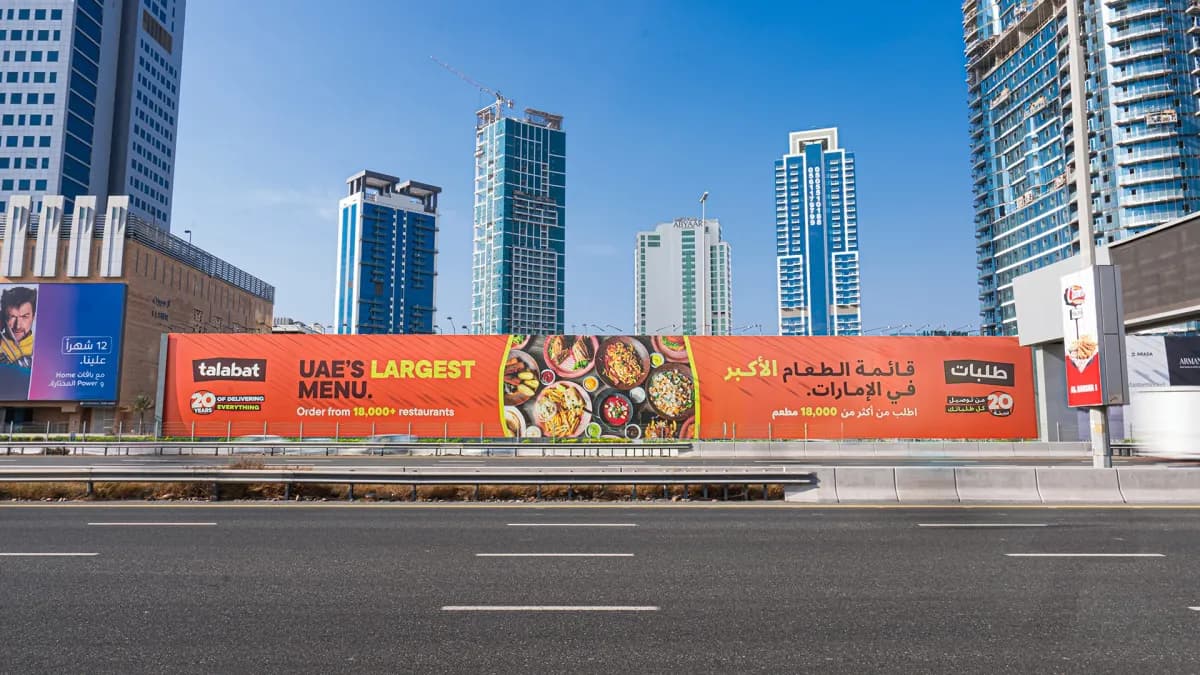
A billboard does not need someone to click it, pause a video or accept a cookie before it begins working. It simply appears within the places people already visit, creating a visible connection between the brand and everyday life.
Someone may see a restaurant advert while driving home, notice a property development on the way to work or pass the same retail campaign several times during the week. They might not act immediately, but the brand begins to feel familiar. When the time comes to choose where to eat, what to buy or which company to contact, that familiarity can quietly influence the final decision.
This is where OOH Advertising becomes especially valuable. Billboards support the entire customer journey, beginning with awareness and continuing through recognition, trust, consideration and purchase. Their influence often appears later through branded searches, store visits, enquiries and sales rather than through one immediate action.
In a city such as Dubai, where people spend significant time travelling between residential areas, business districts, malls, airports and entertainment destinations, outdoor visibility can become a powerful part of how consumers discover and remember brands.
Familiar Brands Often Feel Like Safer Choices
People naturally feel more comfortable with names they recognise.
A consumer may know very little about a company, but repeated exposure can create a sense of familiarity. When they later encounter that brand in a shop, search result or social media advert, it no longer feels completely unknown.
Billboards are well suited to creating this effect because they remain visible over extended periods. Someone travelling along the same route may see the advert several times each week. The customer does not need to study the billboard carefully for the logo, colours and central message to become recognisable.
This familiarity can reduce hesitation at the buying stage. When shoppers are comparing similar products, the brand they remember may feel more established and reliable.
Out of Home advertising helps companies build this mental availability before a customer actively begins shopping. The brand is already present in the consumer’s memory when a relevant need appears.
Repetition Places the Brand in Everyday Life
One billboard viewing may create awareness. Repeated viewing builds stronger recognition.
People often travel along predictable routes. They commute to work, complete school runs, visit familiar shopping centres and return to the same residential areas. A well-positioned billboard becomes part of this routine.
The message may first feel new. After several viewings, the colours, headline and brand name become easier to recognise. Eventually, consumers may remember the campaign without consciously trying to do so.
This repetition is especially useful for purchases that take time. Property, cars, financial services, healthcare and education are rarely chosen after one advertisement. Consumers may research, compare and discuss their options over several weeks or months.
During that period, a consistent billboard campaign keeps the brand visible. It supports the customer’s decision without demanding an immediate response.
The strength comes from staying present long enough to be remembered at the right moment.
Billboards Create a Sense of Scale and Credibility
Physical advertising can affect how consumers judge a company.
A brand displayed on a large roadside billboard, building wrap or premium digital screen appears publicly committed to the market. The campaign suggests confidence, investment and an intention to remain visible.
This can be particularly important for newer businesses. A customer may discover a company online but feel unsure about its size, reliability or local presence. Seeing the same name across recognised outdoor locations can make the business feel more established.
The effect is not automatic. The creative still needs to look professional, and the message must feel believable. However, a polished billboard in a respected location can strengthen the credibility of the wider campaign.
Premium environments can add another layer to this perception. Advertising near airports, business districts, luxury malls and major roads may help a brand communicate quality, ambition or international relevance.
The location itself becomes part of how the customer interprets the message.
Large-Scale Creative Makes Products Feel Important
Billboards allow brands to display products and ideas at a scale that is difficult to achieve through smaller advertising formats.
A vehicle photographed across a large unipole feels more dramatic. A fashion product displayed on a building wrap can become part of the skyline. A food image shown at an enormous scale may create immediate desire.
This visual impact helps products stand out in the customer’s memory.
The size of the billboard can also make a launch feel significant. When consumers see a new product announced across several major locations, it begins to feel like an event rather than an ordinary promotion.
This can support buying decisions by raising the perceived importance of the product. The customer may become curious, search for more information or discuss the campaign with other people.
Strong scale works best with simple creative. The product should be easy to recognise, and the message should remain clear from a distance.
Clear Messages Help Consumers Make Faster Decisions
Consumers are constantly processing information. An effective billboard reduces the effort required to understand the offer.
The strongest outdoor campaigns usually communicate one idea. This could be a product benefit, a new opening, a limited offer or a simple reason to choose the brand.
A restaurant might focus on a signature dish. A property developer could highlight the location. A technology brand may communicate convenience, while a retailer might promote a clear discount.
When the message is simple, consumers can understand it within seconds and remember it later.
Complicated billboards create the opposite effect. Long paragraphs, multiple offers and several calls to action make it difficult to know what matters most.
The role of the billboard is rarely to explain everything. Its job is to create enough recognition and interest for the customer to take the next step.
Emotional Advertising Can Influence Preference
People do not make every purchase through careful comparison. Emotion plays a significant role in how consumers feel about products, experiences and brands.
Billboards can build this emotional connection through imagery, colour, humour and relatable situations.
A tourism campaign may create excitement around travel. A family vehicle advert could communicate comfort and safety. A luxury brand may use elegant photography to create a sense of exclusivity.
Food advertising can trigger appetite, while entertainment campaigns may create curiosity or anticipation.
The emotion should connect naturally with the product. A forced or confusing idea may attract attention without improving purchase intent.
When the message feels relevant, the billboard can influence how consumers picture themselves using the product. They begin to imagine the experience before making the purchase.
That imagined experience can become a powerful part of the decision.
Location Can Shape the Customer’s Next Action
Billboard location affects more than visibility. It can determine how quickly a customer can respond.
An advert placed near a shopping centre can encourage an immediate visit. A billboard close to a dealership may prompt someone to book a test drive. A restaurant campaign near a busy evening route could influence where people decide to eat.
These moments are particularly valuable because the customer is already close to the point of purchase.
Directional messaging can help guide the decision. A simple location cue, exit number or instruction may be enough to turn interest into action.
Brands can explore billboard advertising in Dubai when selecting high-traffic locations that connect visibility with relevant consumer journeys.
The strongest location is not always the largest or most famous. It is the one that reaches the right audience at a useful moment.
Billboards Can Trigger Impulse Purchases
Some purchases are carefully planned, while others happen because the customer sees the right message at the right time.
A billboard advertising coffee during the morning commute can create an immediate craving. A retail offer near a mall may encourage someone to stop and shop. An entertainment advert can influence weekend plans.
This works because the billboard connects with a current need or mood.
The customer may already be hungry, shopping, travelling or looking for something to do. The advert provides a suggestion at the moment a decision is being formed.
Offers can strengthen this effect, especially when they are easy to understand. A limited-time discount, nearby location or clear availability message may encourage faster action.
The billboard should avoid placing pressure on the audience. A useful and relevant message is usually more persuasive than aggressive sales language.
Outdoor Advertising Supports Longer Buying Journeys
High-value purchases often require several stages.
A consumer may first notice a brand, visit its website, read reviews, compare alternatives and speak with family members before making a decision.
Billboards can support this journey by keeping the company visible throughout the research period.
A property buyer may see the same development on the way to work. A parent considering a school might pass its campaign during regular family journeys. Someone thinking about changing cars may continue seeing a new model while comparing options online.
Each viewing reinforces the brand and may reduce the chance that it is forgotten during the decision process.
This is particularly useful in competitive sectors where several businesses offer similar products. Continuous visibility helps one company remain easier to recall.
Billboards Influence Online Searches
Outdoor and digital advertising are closely connected.
Someone who sees an interesting billboard may not be able to respond immediately, especially while driving. They may remember the brand name and search for it later.
This behaviour can lead to increases in branded searches, direct website visits, app downloads and social media activity.
The billboard needs to make that search easy. The company name should be clear, readable and memorable. Complicated web addresses and long instructions are less likely to stay in the customer’s memory.
A simple phrase such as “Search Dubai Advertising” can sometimes be more practical than displaying several online details.
The landing page should continue the same message shown outdoors. When the consumer reaches the website, they should recognise the headline, colours, product and offer.
Consistency confirms that they have found the correct brand and makes the next step feel more trustworthy.
Billboard Visibility Can Improve Digital Advertising Performance
Consumers often respond differently to online adverts when they have already encountered the brand outdoors.
A social media advert from an unknown company may be easy to ignore. The same advert can feel more credible when the customer recognises the logo from a billboard.
Outdoor exposure creates the first layer of familiarity. Digital advertising can then provide more detail, encourage a click or support conversion.
This combination allows each channel to perform a different role. The billboard builds reach and recognition, while search, social media and display advertising make it easier to take action.
Brands can also use outdoor creative across digital channels to reinforce the same visual memory. The product image, headline and colours should remain consistent enough for the customer to connect the messages.
This connected approach can make the overall campaign feel larger and more established.
The Role of Trust in Purchase Decisions
Trust is essential when consumers are asked to spend money, share information or commit to a long-term service.
Digital environments can sometimes create uncertainty. People encounter misleading adverts, fake websites and unfamiliar companies every day.
Physical visibility can help reduce some of that doubt. A billboard indicates that the brand is publicly presenting itself within the market. Consumers may interpret this as a sign of greater stability.
This effect can support fintech, property, healthcare, technology, education and professional service brands where credibility is a major part of the purchase decision.
The campaign must still behave responsibly. Outdoor advertising cannot replace good customer service, transparent pricing or strong reviews.
However, it can create the initial confidence required for the customer to investigate the brand further.
Context Makes Advertising More Persuasive
Consumers are more likely to notice messages that relate to their current situation.
A cold drinks campaign displayed on a hot afternoon feels immediately relevant. A food delivery advert around dinner time connects with an active need. A travel campaign shown near an airport reaches people already thinking about journeys and destinations.
Digital billboards make this contextual approach easier.
Digital Out of Home advertising allows brands to schedule different messages according to the time of day, campaign stage or audience environment.
A restaurant could promote breakfast in the morning and evening dining later. A retailer might adjust its message during weekends. A transport app could focus on commuting periods.
When the message fits the moment, consumers need less persuasion because the advert already feels useful.
Programmatic DOOH Can Improve Relevance
Programmatic DOOH advertising gives brands greater flexibility over when digital outdoor creative appears.
Depending on the available media network, campaigns may run during selected timings, weather conditions, audience periods or events.
This can help businesses concentrate their budget around moments when consumers are more likely to respond.
A coffee brand may increase activity during morning travel. A family entertainment venue could focus on weekends. A sports-related campaign might run around a major match or event.
The technology should support a clear strategy. Changing the message simply because it is possible will not automatically influence buying behaviour.
The adjustment must make the creative more relevant, timely or useful.
3D Billboards Can Create Stronger Memories
Three-dimensional digital billboards use depth and perspective to make products appear to move beyond the screen.
These campaigns often attract attention because the visual effect feels unexpected. Viewers may stop, record the display or share it through social media.
This extended conversation can influence buying decisions by making the product easier to remember.
Technology, entertainment, automotive, fashion and consumer brands can use 3D creative to demonstrate products in imaginative ways. A phone may appear to float, a vehicle could move through a digital environment or a character may seem to step into the street.
The idea needs to remain connected to the product. A visually impressive display may generate attention, but attention alone does not guarantee purchase intent.
The campaign should still communicate what is being offered and why it matters.
Social Sharing Extends Billboard Influence
A creative billboard can reach people far beyond its physical location.
Consumers often photograph unusual, funny or impressive outdoor advertisements and share them through social media. This turns the physical campaign into online content.
The additional exposure can generate comments, brand searches and news coverage. It may also create a sense that the product or company is part of a larger cultural moment.
Campaigns designed for social sharing usually include a simple idea that is easy to understand in a photograph or short video.
The brand should remain visible when the content is shared. If viewers remember the visual but cannot identify the advertiser, the campaign loses part of its value.
Shareability works best as an extension of the central advertising idea rather than the only objective.
Transport Advertising Builds Recognition Across the City
Fixed billboards create strong visibility in selected locations, while moving media can carry the campaign into more areas.
Transport advertising can support consumer buying decisions by building repeated exposure across regular journeys.
Taxis, buses and other transport formats move through business districts, residential communities, shopping areas and tourist locations. This allows the same campaign to appear in different parts of a customer’s day.
Someone might see a billboard on the way to work and encounter the same message on a taxi later that evening.
This repetition strengthens recognition and gives the campaign a broader physical presence.
Brands interested in moving formats can also explore Dubai Advertising’s guide to transport advertising mediums in Dubai.
Airport Advertising Influences Visitors Early
Airports reach consumers at a moment when they are making plans and preparing to spend.
Arriving visitors may be deciding where to stay, eat, shop and explore. Departing passengers may be looking for gifts, entertainment or services for their journey.
Airport advertising allows brands to communicate within this decision-rich environment.
Longer dwell times in baggage claim, lounges and boarding gates give consumers more time to view and understand the message.
Tourism brands, hotels, retailers, property companies, financial services and luxury businesses can all use the airport to reach international and premium audiences.
The environment can also strengthen brand perception. Companies displayed within modern airport spaces may benefit from associations with travel, professionalism and global relevance.
Mall Advertising Reaches Consumers Close to Purchase
Shopping centres provide another valuable environment for influencing buying decisions.
Consumers inside malls are already browsing, dining and spending. Advertising can guide them towards a particular store, product or experience while the opportunity to act is nearby.
Digital screens, large displays, lift wraps and experiential formats can create visibility throughout the shopping journey.
Messages can promote a store opening, limited offer, new collection or nearby dining option.
Dubai Advertising’s guide to mall advertising in Dubai explains how different mall formats can reach customers within premium retail environments.
The creative should match the consumer’s location. A detailed call to action may work better inside a mall than on a roadside billboard because the audience has more time and freedom to respond.
Lampposts Build Local Familiarity
Lamppost advertising places a brand repeatedly along selected roads and neighbourhoods.
This can be useful for restaurants, clinics, schools, property developments, events and retailers trying to influence nearby consumers.
A sequence of lampposts can reinforce the same message or introduce information gradually. The first display may create awareness, while the next can communicate the offer or location.
The repeated local presence makes the brand easier to remember when the consumer reaches the point of purchase.
Lamppost campaigns are especially effective when they connect with a nearby destination. Simple location cues can direct customers towards a business without requiring complicated instructions.
Bridge Banners Command Attention on Busy Routes
Bridge banner advertising places the campaign directly across major roads and junctions.
The wide format can support simple product visuals, launch announcements and high-impact brand messages.
Bridge banners may influence consumer decisions by creating strong visibility during regular commuting journeys. The same audience can encounter the message several times throughout the campaign period.
Because viewers are often travelling at speed, the creative needs to remain extremely clear. One headline, one product and one recognisable brand identity will usually have the strongest effect.
The position of the banner can also connect the message with nearby shopping districts, business areas or entertainment destinations.
Unipoles Keep Brands Visible from a Distance
Unipole advertising gives brands a large, elevated presence along important routes.
These displays are suitable for long-term awareness, product launches and premium campaigns.
Their height allows the message to become visible before the audience reaches the location, creating more opportunity for recognition.
Unipoles work best with bold images, large text and uncluttered layouts. A complicated offer may become difficult to read from the road.
For brands trying to influence future purchase decisions, a strong unipole can become a repeated visual cue across daily journeys.
Seasonal Timing Can Encourage Faster Action
Consumer priorities change throughout the year.
Retail periods, school terms, holiday travel, major events and religious occasions can all affect what people are ready to purchase.
Billboard campaigns can become more persuasive when they connect with these moments.
A back-to-school advert reaches parents when education and family purchases are already important. A Ramadan campaign can communicate relevant offers, experiences or services. Tourism campaigns may focus on peak visitor periods.
Brands can use Dubai Advertising’s guide to timing outdoor advertising campaigns in Dubai when planning seasonal activity.
The campaign should launch early enough to influence the decision before the customer has committed their budget elsewhere.
Offers Work Best When They Are Easy to Understand
Billboards can support promotional activity, but the offer must remain simple.
A clear price, discount or benefit can create urgency and encourage action. Several competing offers may confuse the audience.
The main promotion should be large enough to read, while essential conditions should be included clearly where required.
A useful billboard answers three questions quickly:
What is being offered?
Why should the customer care?
What should they do next?
When consumers can understand the value within seconds, they are more likely to remember the offer and respond later.
Strong Calls to Action Guide the Next Step
A billboard should give interested consumers a clear path forward.
The most suitable call to action depends on the location and campaign objective.
Roadside advertising may encourage people to search for the brand, visit a nearby location or remember a short website address. Airport and mall placements can use QR codes because audiences have more time to scan them.
Retail campaigns may promote a store visit, while app campaigns can focus on downloads.
The call to action should be realistic. Drivers should never be expected to read complicated instructions or scan codes while moving.
One simple action is enough. Asking consumers to call, search, follow, scan and visit at the same time weakens the message.
Billboards Can Influence Choice at the Final Moment
Outdoor advertising often appears close to the point where decisions are made.
A restaurant advert may be the final message someone sees before choosing dinner. A directional retail billboard can influence which shopping centre they visit. A hotel campaign near an airport may guide a traveller who has not completed their booking.
This final exposure can be especially powerful when the customer already recognises the brand.
The billboard reminds them of earlier advertising, reviews or recommendations and gives them confidence to act.
This is why outdoor media can support both brand awareness and direct response. Its influence depends on the campaign location, timing and message.
How to Measure Billboard Influence
Billboards do not always produce an immediate, trackable action, but their effect can still be measured.
Brands can monitor changes in branded search activity, direct website visits, app downloads, inbound calls and store enquiries.
Dedicated landing pages and promotional codes can provide further insight. QR codes can track engagement in suitable pedestrian locations.
Retailers may compare store visits before, during and after the campaign. Location-based studies and brand surveys can help measure recognition, recall and shifts in perception.
Digital outdoor networks may also provide estimated impressions and delivery reports.
Measurement should begin with the campaign objective. A brand awareness campaign should not be judged only by direct sales. A directional retail campaign will require different indicators from a long-term reputation campaign.
Several signals considered together will usually provide a more realistic picture of influence.
Avoiding Common Billboard Mistakes
Too much information is one of the most common problems in billboard advertising.
Consumers cannot absorb a full product page while travelling past a display. The message needs to be reduced to its most persuasive idea.
Small text creates another issue. The artwork may look clear on a computer screen but become unreadable at the final size and viewing distance.
Weak contrast, crowded imagery and unclear branding can also reduce recall.
Brands should avoid calls to action that do not suit the environment. QR codes belong in places where people can stop safely.
Location choices should be based on the target audience rather than fame alone. A highly visible billboard can still underperform when the wrong customers pass it.
The website, social advertising and retail experience should also match the billboard. Consistency helps turn recognition into trust.
Building a Campaign Around Consumer Behaviour
The strongest billboard strategies begin with an understanding of the customer.
Where do they live, work, shop and spend time?
Which routes do they use?
What matters to them when choosing the product?
How long does their buying decision usually take?
These questions help brands select formats, locations and campaign durations.
A restaurant may need strong evening visibility close to residential areas. A business service might focus on commercial districts and airports. A retailer could combine major billboards with mall screens and transport advertising.
Creative should then focus on the most relevant consumer benefit.
The media plan can include different formats, but each placement should have a clear role. Billboards may create broad awareness, lampposts can build local frequency and digital screens may promote timely offers.
Brands can explore the full range of outdoor advertising formats in Dubai and review Dubai Advertising campaign case studies for planning inspiration.
Visibility Makes Brands Easier to Choose
Consumers rarely make decisions because of one advertising message.
They notice brands across several moments. They hear recommendations, see online content, read reviews and encounter advertising during their daily routines.
Billboards influence this process by keeping the brand physically visible. They create familiarity before the customer needs the product and reinforce trust while the decision is being made.
A clear message in the right location can encourage a search, store visit, enquiry or purchase. Even when no immediate action occurs, the campaign can place the brand in the customer’s memory for later.
In Dubai, outdoor advertising reaches people where they commute, shop, work, travel and socialise. This makes it a powerful channel for influencing consumer choices throughout the buying journey.
The billboard may not receive the final click, but it can be the reason the customer recognises the name they eventually choose.
Frequently Asked Questions
Q1. How does billboard advertising influence consumers?
Billboards build recognition through repeated exposure. When consumers later need a product or service, familiar brands may feel more established and easier to trust.
Q2. Can billboards directly increase sales?
Yes, particularly when campaigns promote a clear offer, appear close to a store or provide simple directions. Billboards can also influence later purchases by encouraging branded searches and website visits.
Q3. How long should a billboard campaign run?
The ideal duration depends on the product, audience and objective. Awareness campaigns often benefit from several weeks of repeated exposure, while promotional campaigns may run around a specific event or sales period.
Q4. Are digital billboards more effective than static billboards?
Both formats can be effective. Static billboards provide continuous visibility, while digital billboards allow movement, changing messages and more flexible scheduling. The best choice depends on the campaign idea and location.
Q5. How can a business measure billboard advertising results?
Businesses can track branded searches, website traffic, calls, QR code scans, promotional code usage, store visits and enquiries. Brand recall surveys and digital screen delivery reports may provide additional insight.
Influence Your Customers Where Their Decisions Begin
Whether you want to build awareness, launch a product, increase store visits or strengthen trust, Dubai Advertising can help create an outdoor campaign that stays in your audience’s mind.
Our team can plan campaigns across billboards, building wraps, airports, taxis, buses, malls, bridge banners, lampposts, unipoles, DOOH and other high-impact locations throughout Dubai.
Contact Dubai Advertising or get started with your billboard advertising campaign and turn everyday visibility into real consumer action.
Get a Tailored Quote Now to Launch Your Outdoor Campaign!
Your audience is out there, on roads, at airports and across screens. Every moment of delay is a moment of lost visibility. So, why wait? Request a personalised quote now to plan and roll out your OOH advertising Dubai campaign at full speed.
We craft a bespoke strategy that delivers maximum impact across the city's most strategic locations. From concept to execution, Dubai Advertising gets your campaign up and running faster than ever.