


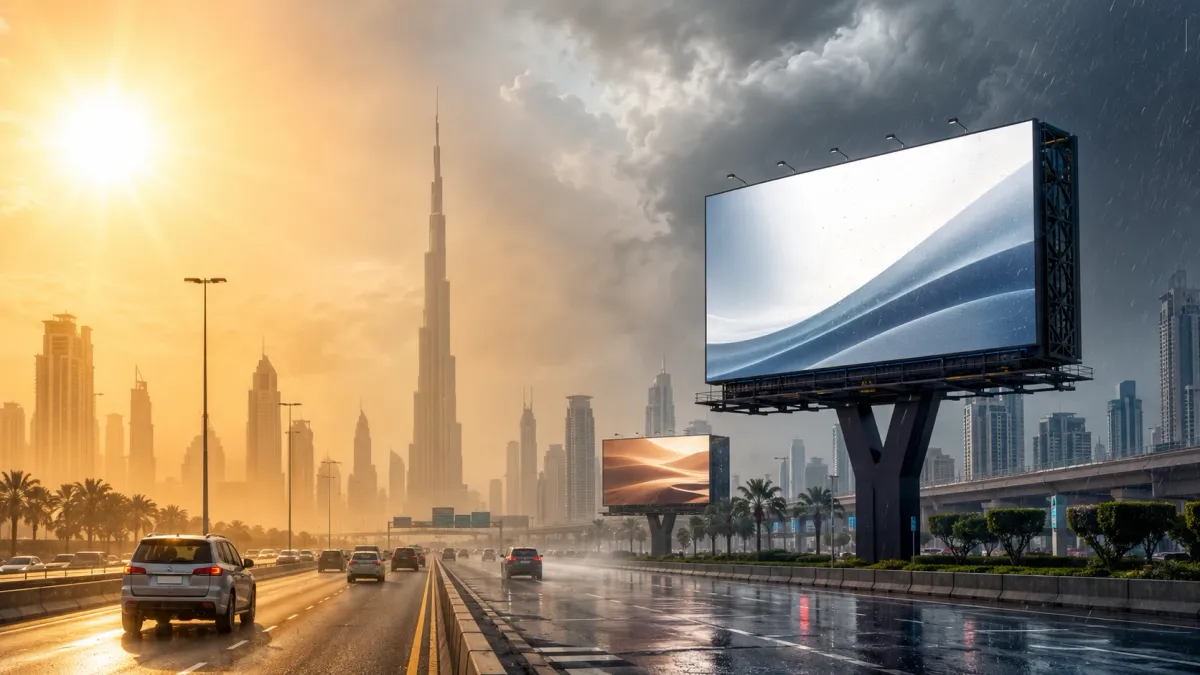
Weather Can Change How People Notice, Feel and Act
Weather has a bigger influence on advertising than most people realise. It affects how people move, what they feel like doing, what they need in the moment and how clearly they can see an outdoor message. For billboard advertising, that makes weather more than just a background condition. It becomes part of the campaign environment.
In Dubai, this is especially important. The city has long sunny periods, intense summer heat, dusty conditions, occasional rain, bright glare, high humidity and seasonal changes that affect both residents and tourists. These conditions can influence how people respond to outdoor ads, whether they are driving on Sheikh Zayed Road, walking into a mall, arriving at the airport or sitting in traffic near a busy junction.
For brands using OOH Advertising, the goal is not to fear weather. The goal is to plan around it. A strong outdoor campaign should remain visible, relevant and effective across different conditions. Better still, the smartest campaigns use weather as a creative advantage, especially with digital outdoor media.
Weather can shape attention. It can trigger demand. It can make some products more desirable and some messages more timely. When a campaign understands that, billboard advertising becomes more than a static message. It becomes part of the real world people are experiencing at that exact moment.
Weather Affects How People Move Around the City
Outdoor advertising works because people are out in the world. They drive, walk, shop, travel, commute, visit attractions and move between different parts of the city. Weather can influence all of this movement.
On very hot days, people may spend more time in cars, malls, offices, hotels and indoor leisure spaces. This can make roadside billboards, mall media, transport advertising, indoor DOOH screens and airport media especially valuable. During cooler months, people may spend more time outdoors, visiting beaches, restaurants, events, tourist areas and walkable districts. In those periods, outdoor formats in lifestyle and leisure locations can become even more effective.
Rain, even when occasional in Dubai, can also change behaviour quickly. People may delay outdoor plans, look for indoor activities, order food, book taxis, visit malls or choose sheltered destinations. A brand that understands these shifts can adjust its media and messaging accordingly.
This is one of the strengths of Out of Home advertising. It exists in the same environment as the audience. It does not sit separately from real life. It appears while people are making decisions shaped by weather, mood, comfort and convenience.
When brands plan outdoor campaigns properly, weather becomes a useful signal for understanding where people may be, what they may want and how they may respond.
Heat Creates Demand for the Right Categories
Dubai’s heat is one of the biggest environmental factors advertisers need to think about. During hotter months, people naturally respond to products and services that offer comfort, cooling, convenience and escape.
This creates strong opportunities for categories such as cold drinks, ice cream, restaurants, food delivery, water brands, swimwear, skincare, sunscreen, gyms, indoor attractions, cinemas, malls, hotels, staycations, wellness, beauty treatments, air conditioning services, car care and travel.
A billboard promoting a chilled drink on a hot afternoon can feel instantly relevant. A mall campaign during summer can remind families where to spend the day indoors. A hotel can promote pool access, spa packages or staycation offers. A food delivery app can use the heat to encourage people to order instead of stepping out.
This is where weather affects more than visibility. It affects intent.
People often make small buying decisions based on how they feel at the moment. If the weather is hot, messages about refreshment, comfort and convenience become more powerful. If a campaign uses that context well, it feels less like an ad and more like a timely suggestion.
For Dubai brands, this can make summer outdoor advertising highly useful, provided the message, location and format are planned around real behaviour.
Rain and Cloudy Weather Can Change the Message
Rain is not as frequent in Dubai as in some other markets, but when it happens, it gets noticed. Traffic patterns change, people seek covered spaces, and indoor destinations become more attractive. That gives advertisers an opportunity to speak to the moment.
A restaurant can promote delivery. A mall can promote indoor shopping and entertainment. A cinema can push film listings. A hotel can advertise a cosy staycation. A transport app can encourage convenient rides. A coffee brand can lean into warmth and comfort. A pharmacy or retail brand can promote rain-related essentials.
The message does not need to be dramatic. It just needs to feel relevant.
This is one reason digital outdoor media is becoming more valuable. A static billboard has one message for the campaign period, but DOOH can adapt creatives based on time, weather, audience movement or seasonal conditions. A brand can run sunny-day messaging during bright weather and switch to indoor activity messaging when rain appears.
In a city where weather shifts can affect plans quickly, flexibility is a clear advantage.
Visibility Changes With Sunlight, Glare and Dust
Weather does not only influence audience behaviour. It also affects how clearly people can see the billboard.
Bright sunlight can create glare, especially on certain digital screens or glossy surfaces. Harsh light can wash out colours, making low-contrast designs harder to read. Dust, humidity and hazy conditions can reduce long-distance visibility. Rain can also make outdoor surfaces appear duller or make the viewing environment more distracting.
This is why billboard creative should be designed for real outdoor conditions, not just for a laptop screen.
High contrast is important. Large text is important. Simple layouts are important. A billboard that looks elegant in a presentation may fail outdoors if the font is too thin, the colours are too soft or the message is too detailed.
In Dubai, brands should be especially careful with pale colour combinations, small text, low-contrast visuals and overly detailed designs. The campaign needs to work under strong sunlight, at night, from moving vehicles and across different distances.
Outdoor creative should be tested as if someone will only see it for a few seconds. If the message cannot be understood quickly, weather and movement will only make the problem worse.
Good Design Helps Billboards Perform in All Conditions
A weather-smart billboard design is usually simple, bold and easy to read. It does not rely on small details or complicated layouts. It uses strong contrast, clear typography and a visual that can be recognised from a distance.
For roadside advertising, the headline should be short. The logo should be visible. The image should be strong enough to understand quickly. The call to action should be simple. If the billboard is on a fast road, the message needs to be even cleaner.
For pedestrian-heavy areas, malls or airport environments, there may be more room for detail because people have more time to view the message. Even then, clarity still matters.
Weather conditions reward simplicity. In bright sun, dusty air, rainy moments or high-traffic environments, a clean billboard will almost always perform better than a crowded one.
This applies across Outdoor Advertising formats, including billboards, bridge banners, lampposts, transport media, airport screens, mall media and DOOH.
The best outdoor ads are designed for the place, the weather and the way people actually see them.
Weather Can Make DOOH More Relevant
Digital Out of Home has changed how brands can respond to weather. Instead of running the same creative all day, digital screens can show different messages based on conditions such as heat, rain, time of day or seasonal demand.
A beverage brand can promote cold drinks during hot afternoons. A coffee brand can run warmer messaging on cooler mornings. A mall can push indoor activities during extreme heat. A beauty brand can promote SPF products during sunny periods. A restaurant can promote delivery during rain. A tourism attraction can switch between outdoor and indoor experiences depending on the day.
This is powerful because it makes the ad feel connected to the audience’s real moment.
Weather-triggered DOOH is especially useful because it combines physical visibility with contextual timing. The message appears in public, but it can still respond like a smart digital campaign. This helps brands avoid generic messaging and speak to what people are actually experiencing.
pDOOH can take this further by allowing more flexible, data-led outdoor campaigns. For brands that want to stay relevant across Dubai’s changing daily conditions, this can be a smart addition to the media plan.
Airport Advertising Is Less Exposed but Still Weather-Relevant
Airport advertising is not affected by outdoor weather in the same way as roadside billboards, but weather still influences the audience mindset.
Travellers arriving in Dubai are stepping into a new climate. During summer, they may immediately think about transport, indoor attractions, hotels, cooling, shopping and convenience. During the cooler tourist season, they may be more open to outdoor experiences, beaches, desert activities, events and dining.
This makes airport media extremely valuable for brands that want to shape choices early. A tourist may see an ad before they have finalised their itinerary. A business traveller may notice a premium service before leaving the terminal. A resident returning to Dubai may be reminded of a seasonal offer, event or service.
Airport advertising also gives brands a controlled environment with strong visibility, high dwell time and premium perception. While outdoor weather may not directly affect the screen or placement, the weather outside can still make certain messages more relevant.
A summer campaign for indoor attractions, shopping, hotel pools or ride-hailing services can work well at the airport because it meets travellers at the start of their journey. A cooler-season campaign for beaches, resorts, outdoor dining or desert experiences can feel equally timely.
Weather does not stop at the billboard. It shapes the customer’s mood and next move.
Weather Also Affects Billboard Materials and Maintenance
Billboards need to be physically ready for the environment they are placed in. In Dubai, that means planning for heat, sunlight, dust, humidity, wind and occasional rain.
Static billboards need durable printing, strong installation and materials that can resist fading. Colours can lose strength over time if the material is not suitable for intense sun exposure. Poor-quality vinyl can start to look tired, especially during longer campaigns. Dust can also affect the appearance of outdoor surfaces, so cleaning and maintenance matter.
Digital billboards need screens that can handle heat, brightness and outdoor exposure. They also need suitable brightness levels so the creative remains visible during daylight without becoming too harsh at night. Proper technical maintenance helps avoid dimming, screen issues or reduced display quality.
For premium campaigns, production quality is part of brand perception. A faded or poorly maintained billboard can harm the way people view the brand. A clean, sharp and well-lit placement feels more professional and trustworthy.
Weather-resistant planning is not just an operational detail. It protects the campaign’s impact.
Seasonal Timing Can Improve Campaign Results
Weather and seasonality are closely linked. In Dubai, different times of year create different advertising opportunities.
The cooler months usually bring stronger outdoor movement, tourism activity, events, dining, beach visits, festivals and leisure plans. This can be a strong period for hospitality, tourism, retail, restaurants, events, luxury, real estate and entertainment brands.
The hotter months shift behaviour towards indoor spaces, delivery, convenience, travel, staycations, malls and air-conditioned experiences. This can benefit brands that offer comfort, escape, indoor entertainment or practical summer solutions.
Ramadan, Eid, Dubai Shopping Festival, summer holidays, back-to-school, New Year’s Eve and major exhibitions can also change how people move and spend. Weather adds another layer to this timing.
A good outdoor campaign should consider when the audience is most active, where they are likely to be and what they may need during that period.
Dubai Advertising’s guides on timing tips for Dubai outdoor advertising success, targeting tourist season in the UAE and Dubai 2026 events and best times to advertise can help brands plan around high-value seasonal windows.
Different Weather Conditions Suit Different Brands
Weather does not affect every brand in the same way. Some categories are directly linked to weather, while others are influenced more subtly.
Hot weather can support campaigns for drinks, ice cream, food delivery, malls, indoor attractions, sunscreen, skincare, hotels, pools, spas, gyms and ride-hailing services. Cooler weather can support outdoor dining, beach clubs, desert safaris, events, tourism, activewear and family entertainment. Rainy weather can support delivery apps, coffee, indoor entertainment, transport, retail, emergency services and convenience-led brands.
Even brands that are not weather-dependent can use weather to make their message feel more human. A real estate developer can show comfort and lifestyle. A bank can promote convenience through digital services. A healthcare brand can remind people to stay well during seasonal changes. A car brand can focus on safety, comfort or performance.
The key is to understand how weather changes the customer’s mood or needs.
A relevant message in the right weather can feel sharper than a general message shown all year.
Location and Weather Work Together
Weather does not affect every location equally. A roadside billboard, mall screen, airport placement, taxi wrap and beachside lamppost campaign will all experience weather differently.
Roadside billboards need to be readable in sunlight, glare, dust and movement. Mall media benefits from indoor comfort and longer dwell time, especially during extreme heat. Airport advertising reaches travellers whose plans may be shaped by the climate they are entering. Taxi advertising moves through changing outdoor conditions and can reach people seeking convenient transport. Beachside or outdoor leisure locations may perform differently depending on heat, humidity and season.
This means media planning should connect location and weather, not treat them separately.
For example, a summer campaign for an indoor attraction may work well in malls, airport arrivals, taxis and digital roadside media. A cooler-season campaign for a beach club may benefit from locations near hotels, JBR, Dubai Marina, Palm Jumeirah and tourist routes. A delivery app may perform strongly with DOOH or transport media during hot or rainy moments.
When the location, weather and message align, the campaign becomes much more persuasive.
Weather Can Support Better Calls to Action
A call to action becomes stronger when it matches the audience’s current need. Weather helps create that urgency.
On a hot day, “Cool down today” feels more relevant than a generic offer. During rain, “Order in tonight” feels timely. During summer, “Plan your indoor day out” can speak directly to families. During the cooler season, “Book your desert escape” feels natural.
The call to action should still be simple. Outdoor ads do not have room for long explanations. But when the CTA connects to the weather, it can feel more immediate.
Examples could include:
- “Book Your Cool Escape” for a hotel or spa
- “Stay In, Order Now” for a delivery app
- “Beat the Heat Indoors” for a mall or attraction
- “Sunny Weekend? Visit Us” for a beach club
- “Fresh Coffee, Rainy Day” for a café
The message should not feel forced. It should feel like the brand understands the moment.
That is what makes weather-aware advertising effective.
Weather-Responsive Campaigns Feel More Human
People notice ads that feel connected to real life. Weather is something everyone experiences, so using it well can make a campaign feel more personal without becoming invasive.
This is important in a world where audiences are tired of generic advertising. A weather-responsive billboard does not need personal data to be relevant. It simply responds to the shared environment.
That makes it useful, timely and respectful.
For example, a DOOH screen that promotes cold drinks during extreme heat is not interrupting the audience. It is matching their likely mood. A mall campaign that promotes indoor entertainment during summer feels practical. A café ad during cooler weather feels warm and inviting.
Weather gives brands a natural reason to speak.
When done well, it can make outdoor advertising feel less like a fixed message and more like a live conversation with the city.
Measuring Weather-Driven Billboard Performance
Weather can also help brands understand campaign performance more clearly. If a product is affected by temperature, rain, humidity or seasonality, brands can compare campaign response during different conditions.
For example, a beverage brand may track sales or website traffic during hotter days. A restaurant may monitor delivery orders during rainy periods. A mall may look at footfall during summer heat. A hotel may track enquiries during peak tourist weather. A retail brand may compare product demand across seasonal changes.
Campaigns can be measured through QR codes, unique landing pages, promo codes, call tracking, website traffic, search uplift, sales enquiries, app downloads and footfall data. DOOH and pDOOH campaigns may also offer delivery and scheduling reports depending on the network and campaign structure.
The important part is to decide what success means before the campaign begins. A weather-triggered campaign should have clear creative variants, relevant conditions and a measurement plan that connects weather moments with audience action.
Weather can be unpredictable, but the strategy does not have to be.
Why Weather Should Be Part of OOH Planning
Weather should never be an afterthought in outdoor advertising. It affects how people move, what they want, how they feel and how clearly they see a campaign. In a city like Dubai, where heat, sunlight, tourism seasons and indoor-outdoor movement all shape daily behaviour, weather can have a real impact on billboard performance.
That does not mean brands should avoid outdoor media during challenging conditions. It simply means they need to plan with the real environment in mind. A strong campaign should use durable materials, clear creative, readable typography and locations that remain visible in different weather conditions. For seasonal campaigns, brands should also think about how the message changes throughout the year, whether that means promoting indoor comfort during summer, outdoor experiences during cooler months or convenience-led services during sudden rain.
This is where DOOH becomes especially useful. Digital outdoor screens allow brands to adapt messages based on timing, temperature, season or weather conditions, helping the campaign feel more relevant in the moment. When the format, location, creative and weather context all work together, weather becomes less of a challenge and more of an opportunity to make the campaign smarter, sharper and more effective.
How Dubai Advertising Helps Brands Plan Smarter Campaigns
Dubai Advertising helps brands plan outdoor campaigns across billboards, building wraps, taxi advertising, bus advertising, MUPIs, lampposts, bridge banners, malls, DOOH, airports and more. Whether your campaign needs mass visibility, tourist reach, seasonal timing, weather-responsive messaging or premium brand presence, the right strategy can make your media work harder.
Brands can explore available formats, view past campaigns on our work, browse helpful resources in the academy, or get started through the contact page.
Weather will always be part of outdoor advertising. The brands that perform best are the ones that understand how to use it.
FAQs
Q1. How does weather affect billboard advertising?
Weather affects billboard advertising by influencing visibility, audience movement, mood and purchasing behaviour. Heat, rain, glare, dust and humidity can all change how people see and respond to outdoor ads.
Q2. Can hot weather improve outdoor advertising performance?
Yes, especially for brands linked to cooling, comfort, convenience and indoor experiences. Cold drinks, food delivery, malls, hotels, skincare, sunscreen, transport apps and indoor attractions can all benefit from hot-weather messaging.
Q3. What is weather-triggered DOOH advertising?
Weather-triggered DOOH advertising uses digital screens that change messages based on live or scheduled weather conditions. For example, a screen can show a cold drink ad during hot weather or a delivery ad during rain.
Q4. How can brands make billboards more readable in difficult weather?
Brands should use high-contrast colours, large fonts, simple layouts, strong visuals and durable materials. The creative should be tested for visibility in sunlight, haze, night-time and moving traffic conditions.
Q5. Can Dubai Advertising help with weather-aware outdoor campaigns?
Yes. Dubai Advertising can help brands plan outdoor campaigns across billboards, DOOH, pDOOH, airports, malls, transport media, lampposts and other formats, with location, seasonality and weather conditions in mind.
Ready to Make Weather Work for Your Campaign?
Weather can shape attention, movement and buying decisions across Dubai. With the right outdoor strategy, your brand can stay visible, relevant and memorable in every season.
Contact Dubai Advertising today and let’s plan an outdoor advertising campaign built for the real world.
Get a Tailored Quote Now to Launch Your Outdoor Campaign!
Your audience is out there, on roads, at airports and across screens. Every moment of delay is a moment of lost visibility. So, why wait? Request a personalised quote now to plan and roll out your OOH advertising Dubai campaign at full speed.
We craft a bespoke strategy that delivers maximum impact across the city's most strategic locations. From concept to execution, Dubai Advertising gets your campaign up and running faster than ever.