


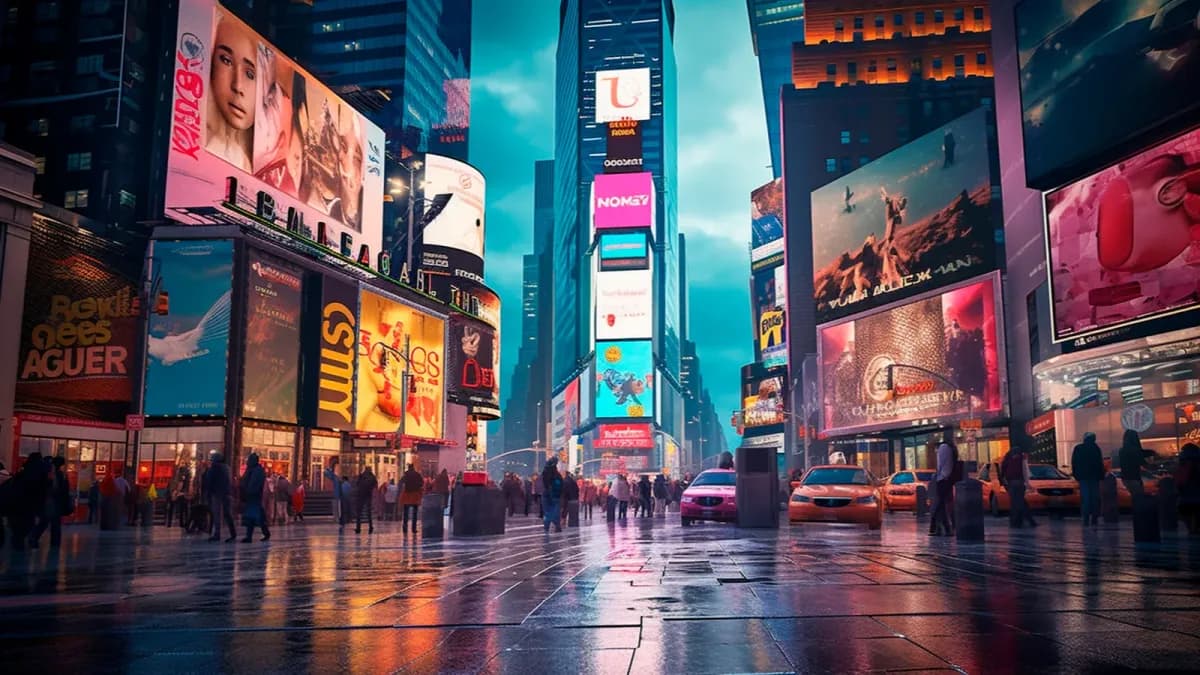
Artificial intelligence (AI) is transforming digital out-of-home (DOOH) advertising by making campaigns smarter, more automated, and more responsive. Traditional outdoor advertising relied on fixed schedules and manual updates, while AI-powered DOOH uses real-time data, predictive analytics, and automation to deliver the right message to the right audience at the right moment.
1. AI Enables Smarter Audience Targeting
DOOH advertisers need to understand who is seeing their ads and when they are most likely to respond. AI helps brands move beyond basic location-based advertising by identifying audience patterns and behaviors.
AI analyzes data such as the following:
- Location patterns
- Foot traffic trends
- Demographic insights
- Consumer behavior signals
- Time-of-day activity
This allows advertisers to select the best screens, locations, and moments to reach their target audiences more effectively.
2. AI Optimizes Campaign Performance in Real Time
Audience behavior and environmental conditions change constantly. A campaign that performs well in the morning may not have the same impact later in the day.
AI platforms continuously analyze campaign data and automatically adjust the following:
- Screen selection
- Ad frequency
- Creative formats
- Display timing
- Audience targeting
This ensures campaigns remain effective and relevant throughout their entire lifecycle.
3. AI Powers Dynamic Creative Optimization (DCO)
Consumers are more likely to engage with advertising that reflects their current environment and needs.
AI automatically selects and modifies creative content based on real-time triggers such as the following:
- Weather conditions
- Traffic levels
- Local events
- Time of day
- Audience behavior
For example:
- A beverage brand can promote cold drinks during hot weather.
- A retail brand can highlight nearby offers during peak shopping hours.
This creates more personalized and contextually relevant advertising experiences.
4. AI Improves Media Buying Through Programmatic DOOH
Manual outdoor advertising purchases can be slow and less flexible. AI-powered programmatic DOOH makes media buying faster, smarter, and more efficient.
AI evaluates thousands of advertising opportunities and determines:
- Which screens to buy
- When to display ads
- How much budget to allocate
- Which audiences to prioritize
Advertisers can focus on reaching valuable audiences rather than simply purchasing physical locations.
5. AI Uses Predictive Analytics for Better Campaign Planning
Brands need to understand where and when advertising will create the greatest impact.
AI analyzes historical and real-time data to predict:
- Audience movement
- High-traffic periods
- Campaign outcomes
- Consumer response patterns
These insights help advertisers plan campaigns more strategically and improve future performance.
6. AI Enhances Measurement and Attribution
Measuring the impact of outdoor advertising has traditionally been challenging. AI helps brands understand campaign effectiveness using advanced analytics.
AI combines multiple data sources to measure the following:
- Audience exposure
- Engagement levels
- Store visits
- Website activity
- Customer actions
This provides a clearer view of how DOOH contributes to marketing goals.
7. AI Enables Automated Content Management
Managing thousands of digital screens manually requires significant time and resources.
AI-powered systems can automatically:
- Schedule advertisements
- Update content
- Monitor screen performance
- Detect technical issues
- Optimize content playlists
This improves operational efficiency and ensures consistent campaign delivery.
8. AI Creates More Personalized Outdoor Experiences
Modern consumers expect advertising that feels relevant and useful.
AI combines contextual information with creative automation to deliver messages based on:
- Location
- Consumer interests
- Environmental conditions
- Real-time situations
This allows brands to create stronger connections with audiences in physical spaces.
9. AI Improves Cost Efficiency
Advertisers need to maximize campaign impact while managing budgets effectively.
AI helps reduce wasted impressions by optimizing:
- Media placement
- Audience targeting
- Campaign timing
- Budget distribution
This allows brands to invest resources in the opportunities most likely to generate results.
10. The Future of AI in DOOH Advertising
AI will continue to advance DOOH through the following:
- Predictive audience targeting
- Automated creative generation
- Computer vision analytics
- Interactive advertising experiences
- Smart city integrations
- Autonomous campaign optimization
Get a Tailored Quote Now to Launch Your Outdoor Campaign!
Your audience is out there, on roads, at airports and across screens. Every moment of delay is a moment of lost visibility. So, why wait? Request a personalised quote now to plan and roll out your OOH advertising Dubai campaign at full speed.
We craft a bespoke strategy that delivers maximum impact across the city's most strategic locations. From concept to execution, Dubai Advertising gets your campaign up and running faster than ever.