


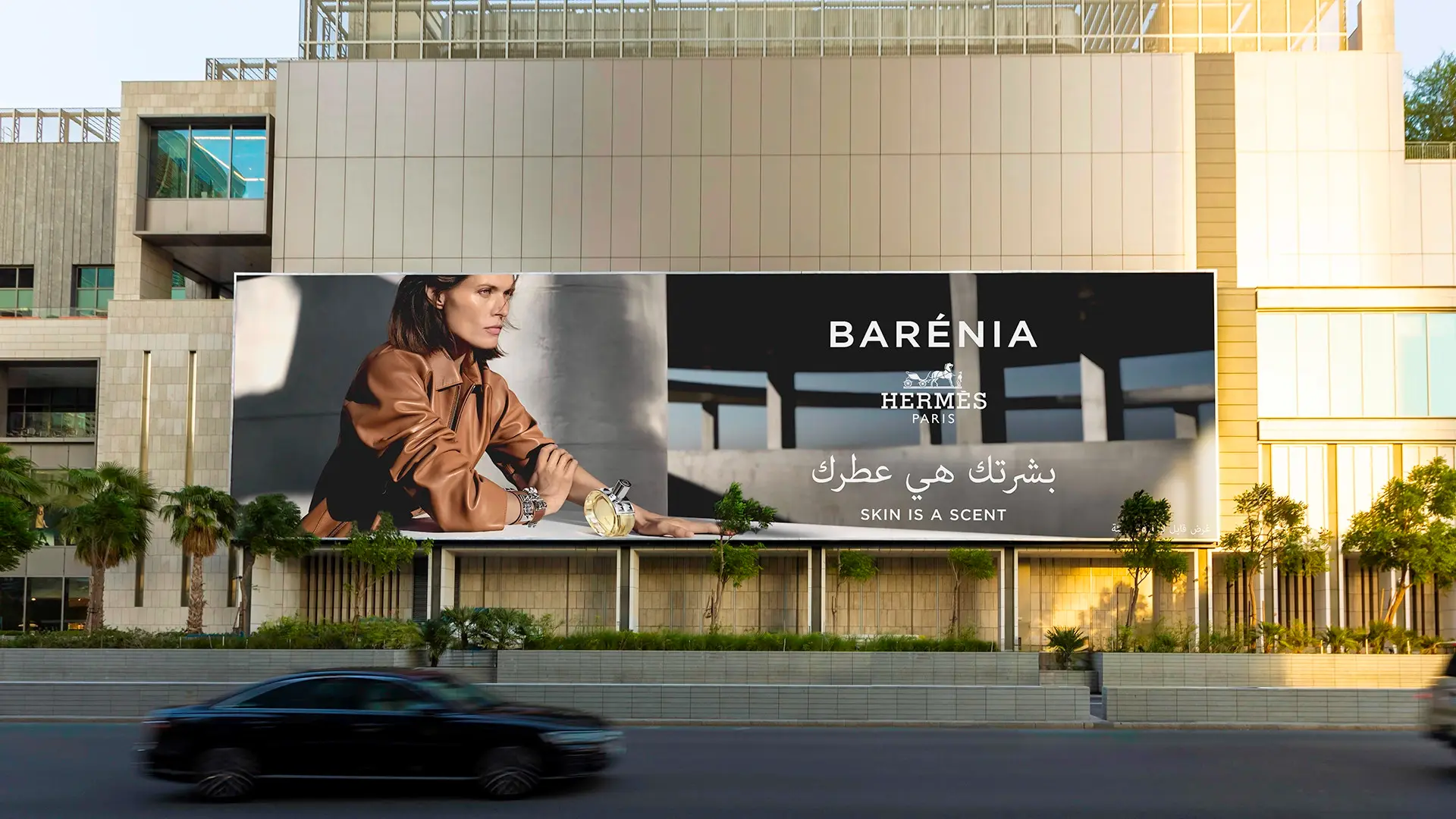
Dubai's transformation from a modest trading port to a global metropolis is mirrored in the evolution of its out-of-home (OOH) advertising landscape. The city's unique blend of tradition and innovation has created a distinctive canvas for outdoor advertising that continues to push boundaries in the region.
The Early Days: 1970s-1990s
In the years following the formation of the UAE in 1971, Dubai's advertising scene was relatively modest. The earliest forms of OOH advertising in Dubai were simple billboards and signage, primarily concentrated in the developing commercial areas like Deira and Bur Dubai.
A significant milestone in Dubai's OOH advertising history came in 1989 when Hanif Merchant founded the Neon Emirates Group. Merchants' vision transformed Dubai's advertising landscape by introducing modern billboard infrastructure at a crucial time in the emirate's development. As Dubai was beginning to accelerate its growth trajectory, Neon Emirates established some of the first strategically placed billboards along emerging commercial corridors, helping to professionalize outdoor advertising in the region.
Merchants recognized Dubai's potential as a growing market where brand visibility would become increasingly valuable. His early investment in billboard infrastructure provided vital advertising channels for both local businesses and international brands entering the market. The company's focus on quality installations and strategic placement helped establish standards for the industry that would continue to evolve over the decades.
During this period, the limited urban development meant fewer prime advertising locations. Most advertising was targeted at the local population and the small expatriate community. The advertisements themselves were often bilingual (Arabic and English) to cater to Dubai's growing international character, but design sophistication was limited by available technology and the nascent advertising industry.
Growth and Expansion: 1990s-2000s
The 1990s marked a significant turning point for Dubai's OOH advertising. As the city began its ambitious development projects under Sheikh Mohammed bin Rashid Al Maktoum's vision, the advertising landscape expanded dramatically. The construction of major highways like the Sheikh Zayed Road created new high-visibility locations for billboards.
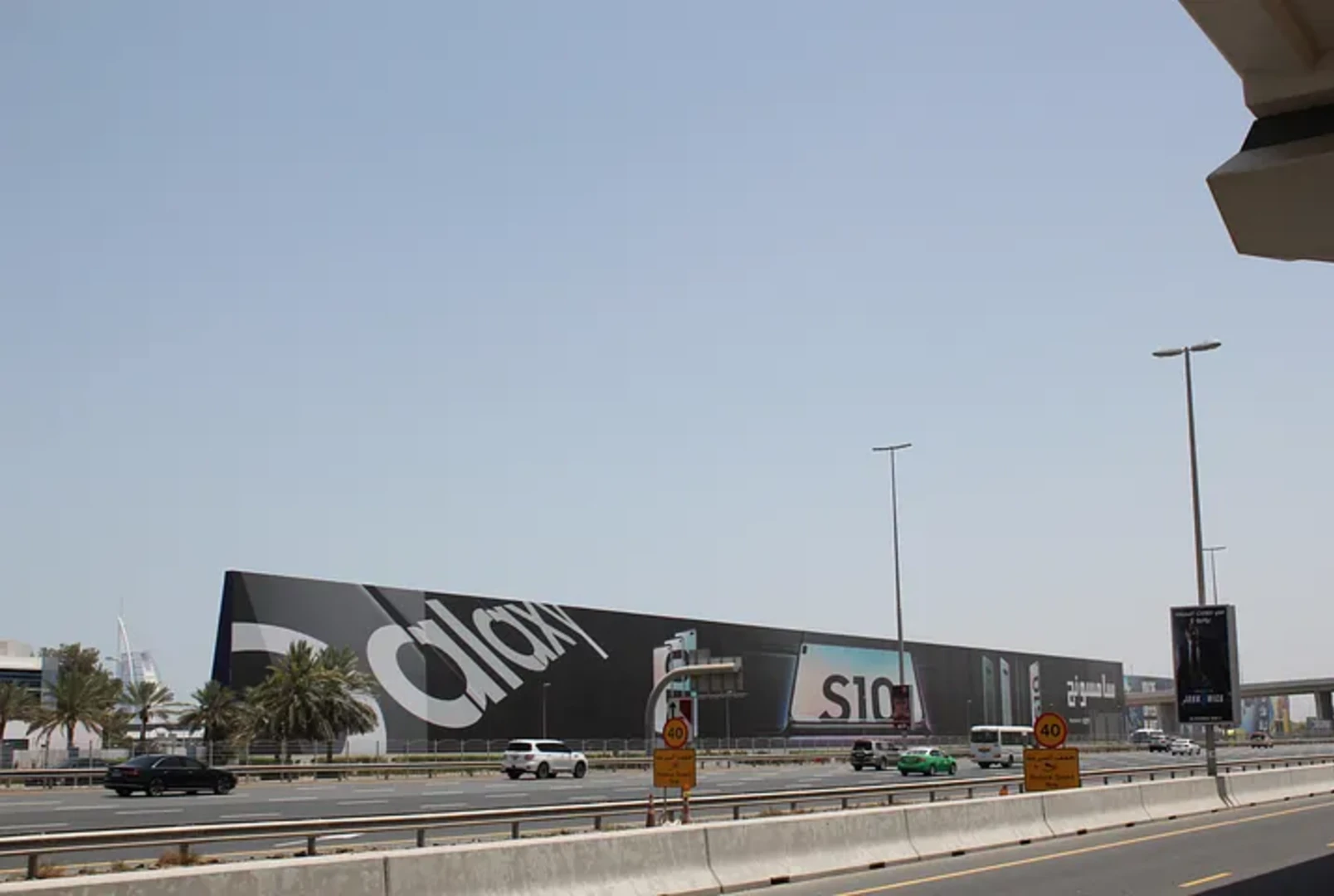
Building on the foundation established by pioneers like Hanif Merchant's Neon Emirates Group, traditional billboards grew in size and number, and new formats emerged. Bus shelters, lamp posts, and other urban infrastructure became advertising spaces. The first digital displays began to appear in high-traffic areas and shopping malls, though they were still relatively simple by today's standards.
During this period, international advertising agencies established operations in Dubai, bringing global expertise and creative approaches. This coincided with Dubai's efforts to position itself as a tourism destination and business hub, leading to more sophisticated advertising campaigns targeting both residents and visitors.
The Digital Revolution: 2000s-2010s
The 2000s saw Dubai embrace digital OOH advertising with characteristic enthusiasm. The opening of Dubai Media City in 2000 created a hub for advertising and media companies, further professionalizing the industry. Large-scale digital billboards and displays began appearing in key locations around the city, particularly in areas like Downtown Dubai and along the Sheikh Zayed Road.
The completion of the Dubai Metro in 2009 introduced new advertising possibilities, with digital displays in stations and on trains becoming prime advertising real estate. Shopping malls, which were rapidly multiplying across the city, incorporated increasingly sophisticated digital displays and interactive advertising installations.
This period also saw the rise of ambient and experiential advertising, with brands creating memorable installations in public spaces. The growing influence of international events like the Dubai Shopping Festival further encouraged creative OOH approaches to capture attention in an increasingly competitive advertising environment.
The Spectacular Era: 2010s- Present
The past decade has witnessed Dubai's OOH advertising scene evolve into one of the most dynamic and technologically advanced in the world. The city's ambitious architectural projects have provided unique advertising opportunities:
- The Burj Khalifa, the world's tallest building, features one of the largest LED façades globally, capable of displaying massive animated advertisements visible across the city.
- The Dubai Frame, the Museum of the Future, and other iconic structures have been utilized for projection mapping and other innovative display technologies.
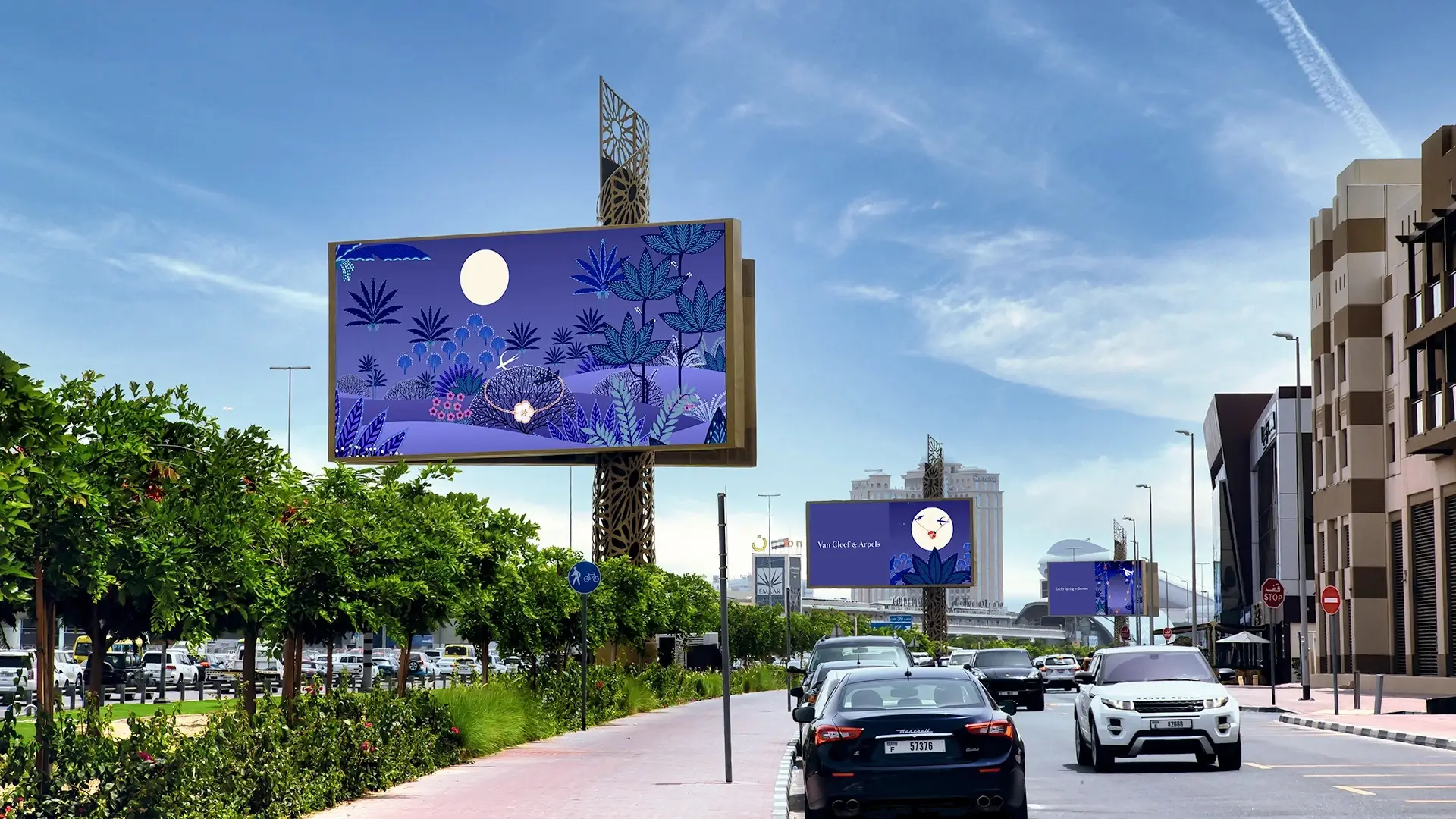
- JCDecaux's implementation of large-scale digital billboards along key corridors has transformed the city's visual landscape.
The integration of data analytics and artificial intelligence has made Dubai's OOH advertising increasingly targeted and responsive. Digital billboards can now change content based on time of day, weather conditions, or even the demographic composition of passersby. The Dubai government's Smart City initiative has further accelerated the adoption of connected and intelligent advertising displays.
Regulatory frameworks have evolved alongside these developments. Dubai Municipality and the Roads and Transport Authority (RTA) have implemented guidelines for outdoor advertising to ensure safety, aesthetic standards, and cultural sensitivity while allowing for creative expression.
The Future of OOH Advertising in Dubai
Looking ahead, several trends are likely to shape the future of OOH advertising in Dubai:
1. Integration with Smart City Infrastructure
As Dubai continues its transformation into a smart city, OOH advertising will become increasingly integrated with urban infrastructure. Connected billboards will communicate with autonomous vehicles, smart streetlights, and municipal systems, creating opportunities for contextualized advertising experiences.
2. Immersive Technologies
Augmented reality (AR) and virtual reality (VR) are set to transform OOH advertising in Dubai. Imagine billboards that come to life through a smartphone camera or interactive installations that transport viewers to virtual brand experiences. Dubai's commitment to technological innovation makes it an ideal testing ground for these approaches.
3. Sustainability Focus
Environmental considerations are increasingly important in Dubai's development plans. Future OOH advertising will likely embrace sustainable materials, solar-powered displays, and designs that complement rather than compete with the urban environment. The Dubai Clean Energy Strategy 2050 will influence how outdoor advertising is powered and constructed.
4. Personalization at Scale
Advanced data analytics and artificial intelligence will enable increasingly personalized OOH experiences. Displays might recognize returning viewers and tailor content accordingly, all while respecting privacy concerns. The blend of mass reach and personalized messaging will make OOH particularly valuable in Dubai's diverse consumer landscape.
5. Cultural Sensitivity and Local Identity
As Dubai continues to welcome visitors and residents from around the world, OOH advertising will need to balance global creative approaches with local cultural sensitivities. Successful campaigns will incorporate elements of Emirati heritage and values while speaking to an international audience.
6. Integration with Digital Platforms
The line between digital and physical advertising will continue to blur. QR codes, NFC technology, and mobile integration will connect OOH displays with digital experiences, creating seamless consumer journeys. The high smartphone penetration rate in Dubai makes this integration particularly effective.
Dubai's OOH advertising industry has mirrored the city's own remarkable journey – from humble beginnings to spectacular innovation. The introduction of modern billboard infrastructure by Hanif Merchant and Neon Emirates Group in 1989 marked a pivotal moment in this evolution, establishing the foundations upon which today's sophisticated industry stands. This pioneering effort came at a critical juncture when Dubai was beginning to accelerate its development, providing essential advertising channels that would support the emirate's growth into a global business and tourism destination.
The combination of visionary leadership, technological embracement, and multicultural influences has created a unique environment for outdoor advertising that continues to evolve. As we look to the future, Dubai is well-positioned to remain at the forefront of OOH advertising innovation. The city's willingness to embrace new technologies, its ambitious urban development plans, and its position as a global business and tourism hub ensure that OOH advertising will continue to find creative expression in the desert metropolis. The story of OOH advertising in Dubai is, in many ways, the story of Dubai itself – one of transformation, ambition, and a constant eye toward the future.
Get a Tailored Quote Now to Launch Your Outdoor Campaign!
Your audience is out there, on roads, at airports and across screens. Every moment of delay is a moment of lost visibility. So, why wait? Request a personalised quote now to plan and roll out your OOH advertising Dubai campaign at full speed.
We craft a bespoke strategy that delivers maximum impact across the city's most strategic locations. From concept to execution, Dubai Advertising gets your campaign up and running faster than ever.