


The Right Message Needs the Right Place
A strong outdoor campaign is never just about the creative. The design matters, the headline matters and the offer matters, but the location is what gives the campaign its real power. A billboard can look beautiful, but if it is placed where the wrong audience passes by, the impact will always be limited. On the other hand, a simple message in the right location can become incredibly effective because it reaches people when they are already close to a decision, a destination or a relevant need.
This is why location sits at the heart of OOH Advertising. Outdoor media works in the real world, so the surrounding environment shapes how people receive the message. A campaign near an airport feels different from a campaign near a mall. A billboard on a busy highway works differently from a lamppost campaign inside a community. A taxi wrap moving through hotels, malls and tourist districts creates a different kind of exposure from a fixed unipole on a major road.
Dubai makes this even more important because the city is built around movement. Residents commute across long routes, tourists move between landmarks, families spend time in malls, business travellers pass through airports and professionals travel through commercial districts every day. Each location brings a different audience, a different mindset and a different opportunity.
For brands using Out of Home advertising, choosing the right location is not a small detail. It is one of the biggest reasons a campaign succeeds.
Dubai Is a City of Movement
Dubai is one of the best cities in the world for outdoor advertising because people are constantly on the move. Roads are busy, malls are active, airports welcome international travellers, and tourist districts stay alive throughout the day and night. This creates thousands of daily moments where brands can be seen in high-value environments.
But not all movement is the same. A person driving along Sheikh Zayed Road is in a different mindset from someone walking through Dubai Mall. A tourist arriving at Dubai International Airport is thinking differently from a resident doing the school run. A shopper inside Mall of the Emirates is closer to purchase than someone scrolling at home. A business traveller near DIFC may be more valuable for a premium service than a broad roadside audience elsewhere.
That is why outdoor advertising location planning should begin with one question: who are we trying to reach?
Once that is clear, the media choices become much smarter. A brand targeting tourists may need airport media, taxis, malls and hotel districts. A brand targeting families may focus on communities, schools, supermarkets and family destinations. A luxury brand may need premium roads, high-end malls and affluent districts. A mass-market brand may need major highways, transport media and high-footfall public spaces.
Location turns outdoor advertising from simple visibility into strategic visibility.
Visibility Is More Than Just Traffic
Many people assume the best outdoor location is simply the one with the highest traffic. High traffic is important, but it is not the full story. A campaign also needs clear visibility, strong viewing angles, enough dwell time and the right audience.
A billboard on a busy road can perform well if drivers and passengers can see it clearly from a distance. If trees, buildings, road signs or other structures block the view, the value of the location drops. If traffic moves too quickly, the message needs to be extremely simple. If people are stuck in slower-moving traffic, there may be more time for a slightly more detailed message or a stronger visual story.
Line of sight matters. Height matters. Lighting matters. The side of the road matters. The angle of approach matters. Even the surrounding clutter matters because a billboard surrounded by too many competing signs may struggle to stand out.
Good outdoor planning looks at the full environment, not just the number of people passing by. The goal is not only to be present. The goal is to be noticed, understood and remembered.
That is where experienced planning makes a difference.
Location Helps You Reach the Right Audience
A campaign becomes far more effective when the location matches the audience. This sounds simple, but it is one of the most common areas where brands waste money.
For example, a luxury real estate brand should not only chase cheap visibility. It needs to appear in locations where potential buyers, investors and high-income audiences are likely to move. A children’s education brand may perform better around residential communities, schools and family malls. A restaurant may benefit from visibility near office districts, nightlife areas or shopping destinations. A tourism brand may need to be seen near airports, hotels, beaches and attractions.
The same applies to B2B campaigns. A brand targeting business owners, executives or investors may need visibility around DIFC, Business Bay, Downtown Dubai, trade centres, airports and premium hotel routes. A campaign targeting everyday consumers may need broader exposure across communities, malls, transport routes and high-footfall roads.
This is the advantage of Outdoor Advertising in Dubai. It can be planned around real audience behaviour. Instead of hoping the right people see the ad, brands can choose locations that naturally match where their audience lives, works, shops, travels and spends time.
The better the location fit, the less media spend is wasted.
The Right Location Reaches People in the Right Mindset
Outdoor advertising becomes especially powerful when it reaches people close to the point of action. This is often called the path to purchase, but in simple terms, it means showing up when the audience is already thinking about something relevant.
A food brand near a supermarket has a clear advantage because shoppers are already in buying mode. A restaurant ad near a mall or office district can influence lunch, dinner or weekend plans. A hotel ad at the airport can reach travellers as they enter the city. A real estate billboard near a premium residential corridor can reach people already thinking about lifestyle, location and investment. A fitness brand near gyms, wellness centres or active communities can speak to people in the right mindset.
This is what makes location so valuable. It adds context to the message.
The same creative can feel more powerful when it appears in the right place. A beach club ad near JBR or Palm Jumeirah feels natural. A luxury watch campaign near a premium mall feels relevant. A children’s activity campaign near family communities feels useful. A travel app at the airport feels timely.
The location helps the audience understand why the message matters now.
Airports Create Premium First Impressions
For many brands, Airport advertising is one of the strongest location choices in Dubai. Airports are not just transit spaces. They are international gateways where tourists, business travellers, residents and high-spending audiences pass through with strong attention and intent.
A brand seen at the airport often feels established. It carries a sense of scale, credibility and importance. This is especially useful for luxury brands, hotels, tourism companies, financial services, real estate developers, airlines, retail brands, technology companies and premium experiences.
Airport media works at several stages of the journey. Arrival placements can influence what visitors notice first. Baggage claim areas offer longer dwell time. Departure areas allow brands to reach travellers before they leave. Taxi queue and airport road placements can continue the message as people move into the city.
For tourism and hospitality brands, airport locations are especially valuable because they reach visitors before their plans are fully fixed. A hotel, restaurant, attraction, mall or travel service can become part of the visitor’s Dubai experience from the very beginning.
That is the power of choosing a location where the audience is both valuable and receptive.
Highways Build Scale and Repetition
Dubai’s major roads are some of the strongest outdoor advertising environments in the region. Roads such as Sheikh Zayed Road, Al Khail Road, Hessa Street and airport routes carry large volumes of daily traffic, making them ideal for brands that want wide visibility and repeated exposure.
Highway media works well because people often pass the same routes regularly. A commuter may see the same billboard several times a week. A resident may pass a bridge banner every day. A tourist may see a large roadside campaign while moving between hotels, malls and attractions. Over time, this repetition builds familiarity.
This is especially useful for brand awareness campaigns. A new development, product launch, event, retail brand or service can use high-traffic roadside media to become familiar quickly. When people see the same brand in a prominent location again and again, it starts to feel bigger and more established.
Formats such as billboards, bridge banners and unipoles are particularly effective for this kind of impact.
The key is to match the creative to the speed and environment. On fast roads, messages need to be short, bold and easy to process. In slower traffic areas, brands may have more room to include a clearer call to action or supporting detail.
Malls Offer Dwell Time and Buying Intent
Malls in Dubai are not only retail spaces. They are social, dining, entertainment and tourism destinations. People spend real time inside them, which gives advertisers an advantage that many roadside formats do not always have: dwell time.
When people are walking through a mall, waiting near lifts, entering a cinema, sitting in a food court or browsing stores, they have more time to notice advertising. This makes mall media powerful for brands that need engagement, consideration or immediate action.
Retail brands, restaurants, entertainment venues, beauty brands, fashion labels, family attractions, apps and luxury products can all benefit from mall locations. The audience is already in a spending environment, which makes the message more relevant.
For example, a beauty brand inside a mall can influence shoppers who are already open to discovery. A restaurant ad can guide people towards dinner plans. A family attraction can reach parents while they are already planning activities. A retail campaign can push traffic towards a store nearby.
Mall advertising works because the location supports the behaviour. People are not just passing through. They are browsing, choosing, comparing and spending.
Street-Level Media Builds Local Presence
Not every campaign needs a giant billboard. Sometimes the strongest impact comes from repeated visibility across a specific area. This is where street-level formats such as lampposts, MUPIs and community-based placements can be very effective.
Lamppost advertising is useful for brands that want to dominate a route or district. Instead of one large impression, the audience sees the message again and again across a stretch of road or neighbourhood. This helps build familiarity and local recall.
This works well for schools, clinics, restaurants, retail outlets, real estate launches, local services, community events and area-specific campaigns. A brand can use lampposts around a target community, near a mall, along a beach road, close to a school zone or around a commercial district.
Street-level media also feels more local. It meets people in their daily routine, close to where they live, shop or work. For many brands, that local presence can be more valuable than broad reach.
The best location is not always the biggest one. It is the one that fits the job.
Transport Advertising Moves With the Audience
Dubai is a city that depends on movement, and transport advertising allows brands to move with it. Taxi advertising, bus advertising and other mobile formats help campaigns travel across multiple districts instead of staying fixed in one place.
This is especially useful for brands targeting tourists, residents and citywide audiences. Taxis move through airports, hotels, malls, beaches, business districts and entertainment areas. Buses cover long routes and reach broad public audiences. Transport formats can give brands consistent visibility throughout the day in many different environments.
Taxi advertising is particularly strong for tourism, hospitality, apps, restaurants, real estate and retail brands because taxis naturally appear in high-value areas. They are seen by passengers, pedestrians, drivers and people waiting at hotels, malls and attractions.
Transport media also helps campaigns feel active. The brand becomes part of the city’s movement, appearing in different places and reaching audiences in multiple contexts.
For brands that want flexible citywide visibility, transport can be a smart addition to fixed outdoor placements.
DOOH Makes Location More Flexible
Digital Out of Home, or DOOH, adds another layer to location planning. With digital screens, brands can change messages based on time, day, audience behaviour, events, seasons or campaign needs.
This makes location even more valuable because the same screen can serve different messages at different moments. A coffee brand can run morning messages near commuter routes. A restaurant can promote lunch offers in business districts and dinner offers near leisure areas. A retail brand can push weekend promotions in malls. A tourism brand can promote attractions during peak visitor hours.
pDOOH can also help brands use data-led planning to make campaigns more targeted and efficient. Instead of treating outdoor as one fixed message, brands can use location, timing and audience patterns to make the campaign feel more relevant.
The creative still needs to be simple, but the delivery can be smarter.
This is one of the reasons DOOH is becoming increasingly important in Dubai. It brings flexibility to a medium that already has scale, visibility and physical presence.
Premium Locations Build Brand Perception
Where a brand appears affects how people judge it. A campaign in a premium location can make a brand feel more established, more successful and more trustworthy.
This is especially true in Dubai, where location carries strong meaning. A billboard on a major road, a presence inside a luxury mall or a campaign at the airport can create an immediate sense of credibility. People often assume brands in these spaces are serious players.
That perception matters.
A luxury brand needs to appear in environments that feel premium. A real estate developer needs to build confidence. A financial brand needs credibility. A hotel or attraction needs to feel worth visiting. Outdoor location can support all of these goals.
This does not mean every campaign needs the most expensive site. It means the location should match the brand’s positioning. Premium brands need premium environments. Community brands need community relevance. Mass-market brands need high-frequency reach. Digital-first brands may need locations that support app downloads or online searches.
Location is not just about exposure. It also shapes the way the brand is perceived.
Cheap Locations Can Become Expensive Mistakes
It can be tempting to choose a cheaper outdoor site to save budget, but the lowest price is not always the best value. A low-cost location may have poor visibility, weak traffic, limited audience relevance or bad viewing angles. In that case, the campaign may technically be live, but it may not deliver meaningful impact.
Outdoor advertising should be judged by value, not just cost.
A premium site in the right location may cost more, but it can deliver stronger reach, better recall and more relevant exposure. A cheaper location may save money upfront, but if the right audience does not see the ad, the campaign may struggle.
The smarter question is not “Which location is cheapest?” It is “Which location gives this campaign the best chance of working?”
For some brands, that may mean a major billboard. For others, it may mean a focused lamppost route, a mall media package, airport visibility, taxi advertising or a combination of formats.
Good planning helps brands spend better, not just spend less.
Matching Location With Campaign Goals
Every campaign has a different purpose, and the location should match that purpose.
If the goal is brand awareness, high-traffic roads, billboards, bridge banners, unipoles and transport media can help create scale. If the goal is premium perception, airports, luxury malls, business districts and major roads may be more suitable. If the goal is footfall, locations near malls, stores, restaurants, attractions or event venues will usually work better. If the goal is local dominance, lampposts and community media can help build repeated exposure in specific areas.
For tourism campaigns, airports, taxis, malls, beaches and hotel districts are often useful. For family campaigns, residential communities, schools and family malls may be stronger. For retail, malls and shopping routes make sense. For real estate, premium roads, target communities and investor-heavy areas can help create awareness and trust.
There is no single best location for every brand. The right location depends on the audience, objective, budget and message.
That is why media planning should never be random.
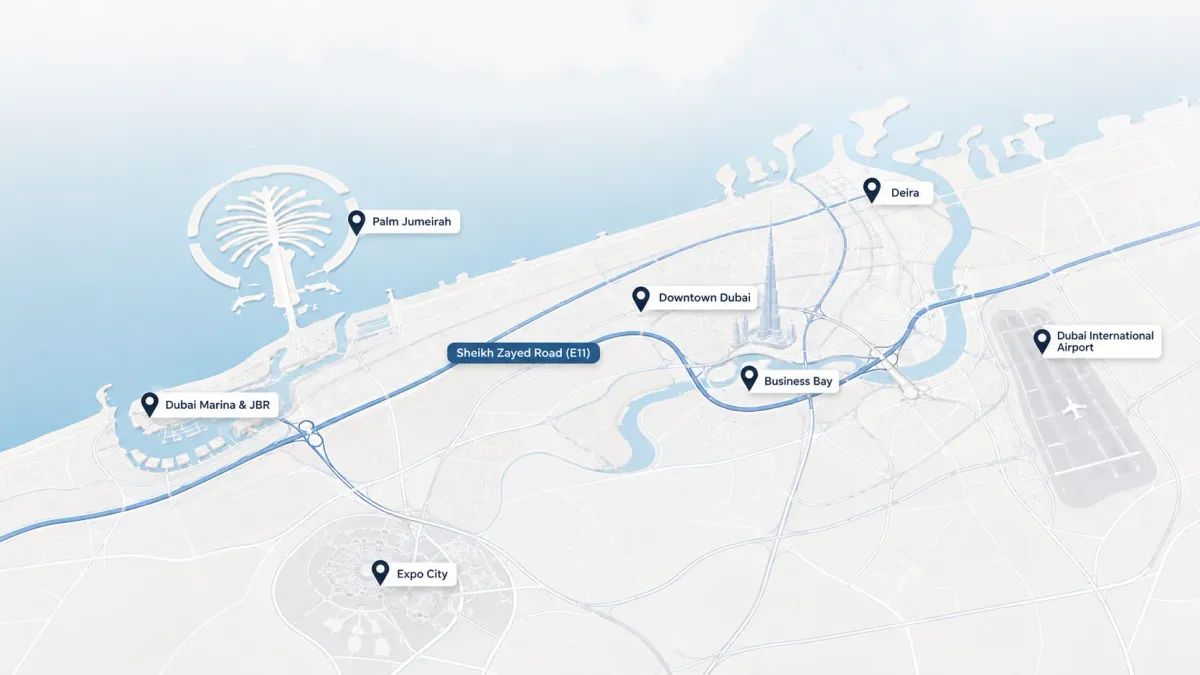
Dubai Locations That Often Work Well for OOH
Dubai has many strong outdoor advertising zones, each offering a different kind of value.
Sheikh Zayed Road is powerful for broad awareness, premium visibility and large-format campaigns. Downtown Dubai works well for tourism, luxury, hospitality, real estate and retail. Dubai Marina and JBR are strong for leisure, dining, tourism, nightlife and lifestyle brands. Palm Jumeirah is valuable for luxury, hospitality, wellness and premium experiences. Business Bay and DIFC are useful for B2B, finance, real estate and professional services. Dubai International Airport is ideal for travel, tourism, luxury, finance and global brand campaigns.
Malls such as Dubai Mall and Mall of the Emirates offer strong dwell time and purchase intent. Community areas can work well for schools, clinics, supermarkets, restaurants and local services. Roads connected to hotels, beaches and attractions can support tourism and hospitality campaigns.
The best results often come from combining locations. A brand might use billboards for impact, taxis for movement, mall media for engagement and digital retargeting to continue the journey online.
Outdoor works best when the media plan follows the audience’s real life.
Creative Should Change With the Location
The same billboard design should not automatically be used everywhere. Creative should be adapted to the location and viewing behaviour.
On a fast road, the message should be extremely short. A big visual, a clear logo and a simple headline will usually work best. In a mall, the creative can include more detail because people have longer dwell time. At the airport, the message can speak to arrival, travel, convenience or premium experience. In a community, the copy can feel more local and direct. On a taxi, the design needs to work from different angles and distances.
Location should guide the creative.
This does not mean changing the entire campaign each time. The brand identity should remain consistent. But headlines, calls to action, language, imagery and layout can be adjusted based on where the ad appears.
A campaign feels stronger when the message belongs to the place.
Measurement Starts With Location
Location also affects how a campaign is measured. A billboard near a store may be judged by footfall uplift. A QR code in a mall may be judged by scans. A campaign near a hotel district may be measured through enquiries, bookings or website visits. A high-road billboard may be better judged by reach, brand search uplift and awareness.
The more specific the location strategy, the easier it becomes to understand performance.
Brands can track campaign impact through unique landing pages, promo codes, call tracking, QR codes, search trends, website traffic, social engagement, sales enquiries and footfall data. With DOOH and pDOOH, reporting can become even more structured depending on the format and campaign setup.
Outdoor advertising is sometimes seen as only a brand awareness channel, but good location planning can make it much more accountable. When a campaign is placed close to the right audience and paired with a clear action, it becomes easier to connect visibility with response.
Why Dubai Advertising Helps Brands Choose Better Locations
Choosing the right outdoor advertising location in Dubai takes more than picking a busy road. It requires understanding the audience, the format, the visibility, the timing, the creative, the surrounding environment and the campaign objective.
Dubai Advertising helps brands advertise across Dubai through billboards, building wraps, taxi advertising, bus advertising, MUPIs, lampposts, bridge banners, malls, DOOH, airports and more. Whether the goal is mass awareness, premium positioning, footfall, tourism visibility, app downloads or local market dominance, the right location plan can make the campaign work harder.
Brands can explore available formats, review campaign examples through our work, browse helpful resources in the academy, or speak directly with the team through the contact page.
In outdoor advertising, being seen is important. Being seen in the right place is what makes the difference.
FAQs
Q1. Why is location important in outdoor advertising?
Location matters because it determines who sees your ad, how often they see it and what mindset they are in when they notice it. The right location can improve visibility, relevance, recall and campaign performance.
Q2. What are the best outdoor advertising locations in Dubai?
Strong locations include Sheikh Zayed Road, Dubai International Airport, Downtown Dubai, Dubai Marina, JBR, Palm Jumeirah, Business Bay, DIFC, major malls, tourist routes and busy residential communities. The best choice depends on your target audience.
Q3. Is a high-traffic location always the best option?
Not always. High traffic is useful, but the location must also have clear visibility, good viewing angles, relevant audience movement and enough time for people to understand the message.
Q4. How does location affect billboard advertising?
Location affects billboard advertising by influencing visibility, audience relevance, viewing time and brand perception. A billboard in the right place can build awareness, trust and action more effectively than one in a poorly matched area.
Q5. Can Dubai Advertising help choose the right locations?
Yes. Dubai Advertising can help brands plan outdoor campaigns across billboards, airports, malls, taxis, buses, lampposts, bridge banners, DOOH and other formats across Dubai.
Ready to Put Your Brand in the Right Place?
The right outdoor location can turn a good campaign into a powerful one. Whether you want to reach commuters, tourists, shoppers, families, business travellers or premium audiences, Dubai Advertising can help you choose the formats and locations that make your brand impossible to miss.
Contact Dubai Advertising today and let’s plan an outdoor advertising campaign that reaches the right people, in the right place, at the right time.
Get a Tailored Quote Now to Launch Your Outdoor Campaign!
Your audience is out there, on roads, at airports and across screens. Every moment of delay is a moment of lost visibility. So, why wait? Request a personalised quote now to plan and roll out your OOH advertising Dubai campaign at full speed.
We craft a bespoke strategy that delivers maximum impact across the city's most strategic locations. From concept to execution, Dubai Advertising gets your campaign up and running faster than ever.