


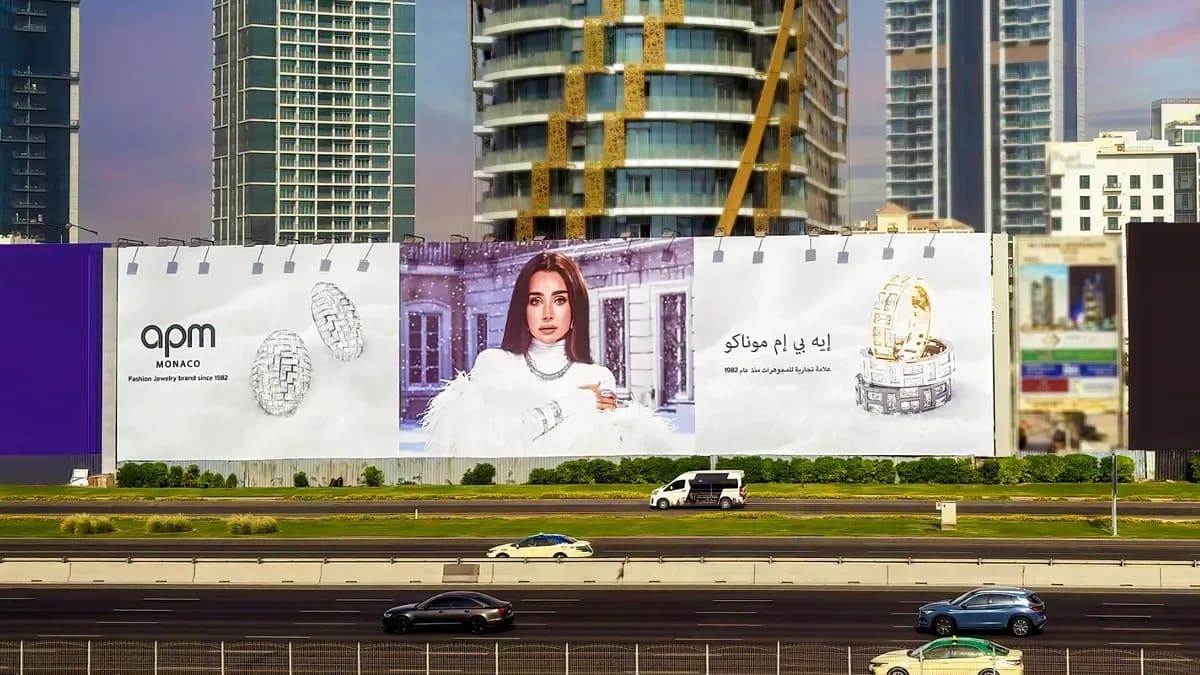
Dubai Speaks Many Languages, So Your Brand Should Too
Dubai is one of the most exciting cities in the world for advertising because almost every audience is here. Residents, tourists, investors, families, business travellers, students, entrepreneurs and luxury shoppers all move through the city every day. They pass the same roads, visit the same malls, travel through the same airports, use the same taxis and notice the same outdoor spaces, but they do not all think, search, shop or respond in the same language.
That is why multi-language advertising in Dubai is so important. A campaign that only speaks in English may reach a wide audience, but it may not connect deeply with everyone. A campaign that includes Arabic can feel more local and respectful. A campaign that uses Hindi or Urdu in the right areas can feel more familiar to South Asian communities. A campaign that uses Russian or Chinese in premium locations can speak more directly to tourists, investors and luxury buyers.
This is where OOH Advertising becomes even more powerful. Outdoor campaigns already give brands public visibility across Dubai. When those campaigns are planned with the right language strategy, they become easier to notice, easier to understand and easier to remember.
Multi-language advertising is not about filling one design with every language possible. It is about understanding who you are trying to reach, where they are likely to see your campaign and what language will make your message feel most relevant.
Why Language Matters in Dubai Advertising
Language shapes how people feel about a brand. It is not just about whether someone can understand the words. It is about whether the message feels like it was made for them.
In Dubai, many people can understand English, but that does not always mean English is the most emotionally effective language. A person may read English at work, speak Arabic at home, watch content in Hindi, search online in Russian or feel more comfortable discussing purchases in Urdu. When a brand recognises that, it creates a stronger connection.
This matters because advertising is not only about being seen. It is about being remembered and trusted. A clear message in the right language can make a brand feel closer, warmer and more accessible. It can help people understand an offer faster. It can reduce confusion. It can also make the brand feel more serious about serving the Dubai market.
For brands using Out of Home advertising, this becomes especially valuable because outdoor ads are often seen quickly. A person may be driving, walking, shopping or commuting. The message needs to be understood in a few seconds. If the language feels natural to the audience, the campaign has a better chance of landing.
Multi-Language Campaigns Help Brands Reach More People
Dubai is a city of movement. People travel between homes, offices, schools, malls, airports, beaches, hotels, restaurants, business districts and tourist attractions every day. This creates a huge opportunity for brands to be seen in different environments and by different communities.
A single English campaign can still perform well, especially for international audiences. However, a multi-language campaign can open the door to wider reach. It allows brands to speak to more groups without relying on one message to do all the work.
For example, a real estate brand may want to reach Arab families, Indian investors, Russian buyers and international professionals. A healthcare brand may want to reach Emirati households, Arab expats, South Asian communities and English-speaking residents. A retail brand may want to attract tourists, local shoppers and workers from different backgrounds. Each of these audiences may respond better when the language feels familiar.
This is why location planning and language planning should work together. A campaign in a premium mall may need a different language mix from a campaign near a residential community. A campaign near the airport may need a different approach from one placed across local commuter routes. The more accurately the language matches the audience, the more effective the campaign becomes.
Trust Is Built Faster When People Feel Included
Trust is one of the biggest benefits of multi-language advertising. When people see a brand using their language properly, it can make the brand feel more thoughtful and more credible.
In Dubai, this is especially important because people are surrounded by brands from all over the world. Some brands feel local and established. Others feel temporary or distant. Language can help decide how your brand is perceived.
Arabic can show respect for the local culture and the wider Arab audience. English can help brands maintain international clarity. Hindi, Urdu, Tagalog, Russian, Chinese and other languages can help brands speak to specific communities in a more personal way.
This sense of inclusion can be powerful. A person may be more likely to trust a clinic if the message feels clear and accessible. A family may feel more comfortable with a school or property campaign that speaks in a language they relate to. A tourist may be more likely to notice a luxury or hospitality campaign that uses their preferred language in the right setting.
Good Outdoor Advertising does not just make a brand visible. It helps the brand feel present in the city. Multi-language messaging adds another layer to that presence by making more people feel recognised.
English Is Important, But It Should Not Carry the Whole Campaign
English is still extremely important in Dubai. It is widely used in business, hospitality, tourism, retail and everyday communication. For many brands, English is the natural starting point because it reaches a broad mix of audiences.
However, English should not always be expected to carry the entire campaign on its own. Dubai is too diverse for that. A message that feels simple and clear in English may still feel more persuasive when supported by Arabic or another relevant language.
For many campaigns, English and Arabic together create a strong foundation. English keeps the campaign accessible to international audiences, while Arabic adds local relevance and cultural credibility. From there, brands can decide whether additional languages are needed based on the target audience, campaign location and product category.
This is especially useful for brands that want to move beyond basic visibility. If the goal is brand trust, enquiries, footfall, bookings or sales, then language choice can influence how comfortable people feel taking the next step.
A campaign can be seen by thousands of people, but if the message does not feel relevant, it may not move them. Multi-language advertising helps close that gap.
Arabic Adds Local Credibility
Arabic has a special role in Dubai advertising. It is the official language of the UAE and carries cultural importance across the country. Including Arabic in a campaign can make a brand feel more respectful, more established and more connected to the local market.
This is particularly important for sectors where trust and reputation matter. Real estate, healthcare, banking, education, luxury, hospitality, automotive and government-related services can all benefit from professional Arabic messaging. It shows that the brand is not treating Dubai as just another market. It is making an effort to communicate properly with the city’s local and regional audiences.
The quality of Arabic matters too. Poor translation can damage the campaign. If the wording feels unnatural, too literal or badly formatted, the brand may look careless. Strong Arabic copy should feel smooth, clear and culturally appropriate.
Design also needs to support Arabic properly. Since Arabic reads from right to left, the layout should be planned carefully. The Arabic should not look like an afterthought. It should sit naturally within the creative, with enough space, proper alignment and a readable font size.
When done well, Arabic can make an outdoor campaign feel much stronger and more locally relevant.
Community Languages Can Make Campaigns More Personal
Dubai’s communities are diverse, and that gives brands many opportunities to create more personal campaigns. While English and Arabic are often the strongest base, other languages can be highly effective when used in the right context.
Hindi and Urdu can be useful for brands targeting large South Asian communities. This can work well for retail, supermarkets, telecom, remittance, food delivery, healthcare, education, transport and everyday consumer services. These languages can help a campaign feel closer to the daily lives of the audience.
Russian and Chinese can be valuable for luxury real estate, tourism, hospitality, premium retail and investor-led campaigns. In the right locations, these languages can help brands speak directly to high-value visitors and buyers.
Tagalog can also work for selected community-focused campaigns, especially for retail, healthcare, remittance, telecom and services aimed at Filipino audiences.
The key is to use these languages with purpose. A brand does not need to use every language in every campaign. In fact, that can make the creative messy and hard to read. Instead, brands should create different versions for different locations, audiences or formats.
This is where Dubai’s outdoor media options become very useful. A brand can use different creative versions across different areas, making the campaign feel more targeted without losing overall brand consistency.
Outdoor Advertising Makes Multi-Language Campaigns Even Stronger
Outdoor advertising is powerful because it exists in the real world. It is not hidden inside an app or placed between pieces of content people are trying to skip. It appears in roads, malls, airports, taxis, buses, buildings and public spaces. It becomes part of the city’s daily movement.
When multi-language messaging is added to outdoor advertising, the campaign can become more inclusive and more memorable. People are more likely to notice a message that speaks to them directly. They are also more likely to understand it quickly, which is important for outdoor formats where attention time can be short.
For example, a bilingual billboard can give a brand both international and local appeal. A multilingual taxi campaign can move through different parts of the city and reach different communities. A digital screen can rotate messages in different languages depending on the location, time of day or audience profile.
Outdoor advertising already gives brands visibility. Multi-language planning gives that visibility a sharper meaning.
This is why brands should think about language at the start of the campaign, not after the design is already finished. The media plan, creative idea, copywriting, layout and call to action should all work together.
Different OOH Formats Can Support Different Language Strategies
Different outdoor formats can support multi-language advertising in different ways. The best format depends on the brand’s objective, audience and message.
- Billboards are ideal for big visual impact. They work well when the message is short, bold and easy to read. For bilingual campaigns, billboards can carry English and Arabic clearly if the layout is clean and not overloaded.
- Bridge banners are strong for commuter visibility. They can help brands build repeated exposure along key roads, especially when the message is simple and memorable.
- Lampposts are useful for area-based campaigns. They can help brands dominate specific communities, streets or districts. This can be useful when the language strategy is linked to a particular neighbourhood audience.
- Transport advertising is especially effective for citywide movement. Taxi and bus advertising can carry a brand across hotels, malls, airports, offices, tourist areas and residential communities. This makes it useful for brands that want broad visibility across different audience groups.
- Airport advertising can support campaigns aimed at tourists, business travellers and international audiences. Depending on the target market, English, Arabic, Russian, Chinese or other languages may be useful.
- DOOH and pDOOH give brands more flexibility. Digital screens can rotate different language versions, adapt creative by timing and keep campaigns fresh without changing the whole media plan.
- When the format and language work together, the campaign feels more natural and more effective.
Localisation Is Better Than Direct Translation
One of the biggest mistakes brands make is treating multi-language advertising as simple translation. A direct translation may be technically correct, but still feel awkward, cold or unclear.
Localisation goes deeper. It adapts the message so it makes sense culturally and emotionally. It keeps the intention of the campaign while making the wording feel natural in each language.
This matters because languages do not always carry the same tone. A playful English line may not work in Arabic. A luxury message may need to sound more refined in one language and more emotionally warm in another. A short retail offer may need to be simplified differently depending on the audience.
Good localisation also considers culture, context, imagery, colours, symbols, numbers, humour and the overall feeling of the campaign. It makes sure the brand does not accidentally sound careless or out of touch.
For outdoor campaigns, localisation must also be practical. The message needs to be short enough to read quickly. It needs to fit the design. It needs to work from a distance. It needs to be clear while someone is moving.
A well-localised campaign feels natural. A poorly translated one feels forced. In a city as competitive as Dubai, that difference matters.
Design Should Be Planned Around the Language
Multi-language advertising needs thoughtful design. It is not enough to write the copy and place it into the same layout. Different languages behave differently on a page, screen, billboard or moving vehicle.
Arabic reads from right to left, so the visual flow may need to change. Some languages take more space than English. Others may need larger type sizes for readability. Certain fonts may look elegant on a screen but become hard to read from a road. Long translated lines can weaken the impact of an outdoor ad if they are not edited properly.
A good design should give every language enough space to breathe. It should make the main message clear. It should keep the logo visible. It should avoid too many competing elements.
This is especially important in Dubai because outdoor environments can be visually busy. Roads, buildings, lights, cars, signs and movement all compete for attention. If a multilingual ad is too crowded, people may see it but not absorb it.
The best multi-language outdoor creative usually has one clear idea, strong branding, clean typography and a simple call to action. It should be easy to understand at a glance.
Multi-Language OOH Can Support Digital Results Too
Outdoor advertising and digital marketing work better when they support each other. A person may see a billboard, search the brand later, scan a QR code, visit Instagram, open Google Maps or send a WhatsApp message. The outdoor campaign creates awareness, while digital channels help turn that awareness into action.
Multi-language advertising can make this journey smoother. If someone sees an Arabic outdoor ad and lands on an Arabic page, the experience feels consistent. If someone sees a Hindi or Urdu message and is directed to a relevant WhatsApp flow or landing page, the campaign feels more personal. If a tourist sees a campaign in their language and can easily take the next step, the brand removes friction.
This is why the full funnel matters. The outdoor ad should not be the only multilingual part of the campaign. Landing pages, QR code destinations, sales scripts, customer support, social media captions and lead forms should support the same language strategy.
Brands can also measure the impact more clearly by using unique QR codes, campaign landing pages, location-based links, promo codes or separate creative versions. This helps show which language, location or format is driving the strongest response.
Multi-language OOH does not just improve visibility. It can help improve the entire customer journey.
Multi-Language Advertising Helps Brands Feel More Local
Dubai welcomes global brands, but the brands that perform well usually understand how to feel relevant in the local market. Multi-language advertising can help with that.
A brand may be international, but when it speaks to people in a way that feels familiar, it becomes more approachable. It feels less like a distant company and more like a brand that understands the city.
This is especially useful for new brands entering Dubai. Outdoor advertising can quickly make a brand visible, while multi-language messaging can make that visibility feel more credible. For established brands, it can help deepen audience connection and show continued commitment to the market.
A brand that appears across Dubai in the right locations, with the right message and the right language, can build stronger recognition over time. People may not enquire immediately, but they start to remember the name. They may see the brand again online. They may mention it to someone. They may come back later when they need the product or service.
That is how outdoor visibility turns into brand familiarity.
Choosing the Right Language Depends on the Campaign Goal
There is no single language mix that works for every campaign. The right choice depends on what the brand is trying to achieve.
If the goal is premium brand awareness, English and Arabic may be enough. If the goal is to reach tourists, the campaign may need languages linked to key visitor markets. If the goal is community engagement, the language should match the neighbourhood audience. If the goal is retail footfall, the language should match the people most likely to visit that location.
A healthcare campaign may need clarity and reassurance. A real estate campaign may need aspiration and trust. A restaurant campaign may need appetite appeal and quick recall. A financial services campaign may need confidence and simplicity. A luxury campaign may need elegance and cultural sensitivity.
Every campaign should begin with the audience. Who are they? Where are they? What language do they prefer? What action do you want them to take? Once those questions are clear, the language strategy becomes much easier to plan.
This is why working with an experienced outdoor media partner can make a real difference. The right partner can help brands choose the format, location and message that make the most sense.
Why Dubai Advertising Helps Brands Speak to the Right Audience
Multi-language advertising in Dubai works best when it is planned properly. The language, location, format, creative and call to action all need to support one clear campaign goal.
Dubai Advertising helps brands advertise across the city through building wraps, taxis, buses, MUPIs, lampposts, billboards, bridge banners, malls, DOOH, airports and more. Whether a brand wants broad awareness, local community reach, tourist visibility, premium positioning or campaign support across multiple touchpoints, the right outdoor strategy can help the message go further.
Brands can explore different advertising formats, review previous campaigns through our work, browse planning resources in the Dubai Advertising Academy or speak directly to the team through the contact page.
In a city as diverse and fast-moving as Dubai, brands cannot afford to speak to everyone in exactly the same way. Multi-language advertising helps your campaign feel clearer, more inclusive and more relevant.
The brands that win attention in Dubai are the ones that understand the audience in front of them.
FAQs
Q1. Why is multi-language advertising important in Dubai?
Multi-language advertising is important in Dubai because the city has a highly diverse population made up of many nationalities, cultures and language groups. Using more than one language helps brands reach wider audiences, build trust and make campaigns feel more relevant.
Q2. Which languages should brands use in Dubai advertising?
The best languages depend on the target audience and campaign location. English and Arabic are often the strongest base. Hindi, Urdu, Russian, Chinese and Tagalog can also be useful for specific communities, sectors and locations.
Q3. Is Arabic necessary for outdoor advertising in Dubai?
Arabic is highly recommended for many outdoor campaigns in Dubai because it adds local credibility and shows respect for the UAE market. It is especially useful for real estate, healthcare, education, banking, luxury, hospitality and government-related services.
Q4. Can multi-language advertising improve OOH campaign performance?
Yes. Multi-language advertising can improve OOH campaign performance by making the message easier to understand, more relevant to the audience and more memorable. It can also support stronger trust, better recall and smoother customer journeys.
Q5. Can Dubai Advertising help with multi-language outdoor campaigns?
Yes. Dubai Advertising can help brands plan outdoor campaigns across billboards, taxis, buses, lampposts, bridge banners, malls, airports, DOOH and other formats. The team can help choose the right locations, formats and campaign approach for your audience.
Ready to Speak to More of Dubai?
Dubai is full of audiences waiting to discover the right brands. The key is making sure your message reaches them in a way that feels clear, relevant and easy to remember.
Dubai Advertising can help your brand create outdoor campaigns that speak to the right people in the right places, whether through billboards, taxis, buses, malls, airports, bridge banners, lampposts, DOOH or other high-impact formats.
Contact Dubai Advertising today and let’s build a multi-language outdoor campaign that helps your brand connect with more of Dubai.
Get a Tailored Quote Now to Launch Your Outdoor Campaign!
Your audience is out there, on roads, at airports and across screens. Every moment of delay is a moment of lost visibility. So, why wait? Request a personalised quote now to plan and roll out your OOH advertising Dubai campaign at full speed.
We craft a bespoke strategy that delivers maximum impact across the city's most strategic locations. From concept to execution, Dubai Advertising gets your campaign up and running faster than ever.