


Location Is Where Outdoor Advertising Begins
Outdoor advertising is one of the most powerful ways to place a brand in front of people as they move through the city. But the success of any campaign depends heavily on one thing: location. A beautiful design, a clever headline and a strong offer can still underperform if the ad appears in the wrong place. On the other hand, a simple message in the right location can create serious impact because it reaches people when they are already nearby, interested or in the right frame of mind.
This is why location is at the heart of OOH Advertising. Outdoor media works in real environments. It appears on roads, bridges, buildings, taxis, buses, malls, airports, lampposts and digital screens. Every one of those spaces has its own audience, viewing time, movement pattern and level of attention.
In Dubai, this matters even more. The city is constantly moving. Residents commute across major roads, tourists travel between hotels and attractions, business professionals move through commercial districts, families spend time in malls and international visitors arrive through one of the world’s busiest travel hubs. A campaign placed in the right part of that movement can feel natural, relevant and impossible to miss.
For brands using Out of Home advertising, location is not just a media detail. It is the difference between being seen by anyone and being remembered by the right people.
Visibility Is About More Than Being in a Busy Place
High traffic is important, but it is not the only thing that makes a location valuable. A billboard on a busy road may look good on paper, but if the viewing angle is poor, the message is blocked, the traffic moves too quickly or the creative is too detailed for the environment, the campaign will lose strength.
A strong outdoor location gives people enough opportunity to see, read and understand the message. That means clear line of sight, suitable height, good lighting, limited obstructions and a viewing distance that matches the format. It also means understanding how people move through the space. A person stuck in traffic has more time to absorb an ad than someone driving at high speed. A shopper inside a mall has more dwell time than a commuter passing a roadside screen. A traveller at the airport may be more open to premium brand messaging than someone rushing through a petrol station.
This is why outdoor planning needs to look beyond impressions. The real question is not only how many people pass the ad. It is how many of the right people can properly notice it.
A well-placed ad does not just exist in a busy area. It commands attention in that area.
The Right Location Matches the Right Audience
Every brand has a different audience, and every location in Dubai attracts a different type of person. This is where outdoor advertising becomes highly strategic.
A luxury real estate campaign may perform well around Downtown Dubai, DIFC, Business Bay, Dubai Marina, Palm Jumeirah, airport routes and major premium roads. A retail or fashion campaign may need mall media, lifestyle districts and pedestrian-heavy areas where people are already in a shopping mood. A restaurant brand may benefit from locations near offices, hotels, beaches, malls and entertainment districts. A tourism brand may need airports, taxis, hotel routes, beaches and attractions. A family-focused brand may work better around residential communities, schools, supermarkets and family malls.
The placement should match the audience’s daily life. Where do they live? Where do they work? Where do they shop? Where do they commute? Where do they spend weekends? Where are they most likely to be receptive to the message?
This is the advantage of Outdoor Advertising in Dubai. It allows brands to target real-world behaviour, not just digital interest. A campaign can appear close to where decisions are made, close to where the product is sold or close to where the desired audience naturally spends time.
When location and audience match, the campaign becomes more relevant. And relevance improves performance.
Context Changes How People Understand the Message
The location of an outdoor ad affects how people interpret the brand. A campaign in a premium mall sends a different signal from a campaign on a neighbourhood lamppost. A billboard on Sheikh Zayed Road feels different from a screen inside a cinema. A taxi wrap moving through tourist areas creates a different impression from a bridge banner on a commuter route.
This context matters.
A luxury watch campaign feels more credible in a premium shopping district. A property development feels more aspirational on a major highway or near an affluent community. A food delivery campaign feels more useful near residential areas, offices or hotels. A beach club ad feels natural around JBR, Dubai Marina or Palm Jumeirah. A university or school campaign feels more relevant near family communities.
The surrounding environment becomes part of the message. It can make the brand feel premium, local, convenient, exciting, trusted or accessible.
That is why brands should never treat outdoor locations as empty spaces. Each location carries meaning. A strong campaign uses that meaning to make the message more powerful.
Location Impacts Recall and Repetition
Outdoor advertising is often most effective when people see the message more than once. Repetition builds recognition, and recognition builds trust. Location plays a major role in creating that repeated exposure.
Daily commuters may pass the same billboard or bridge banner every morning. Families may see the same lamppost campaign while driving around their community. Shoppers may notice a mall screen several times during one visit. Tourists may see the same taxi campaign across hotels, malls and attractions. Business travellers may encounter a brand at the airport and then again on city roads.
This repeated exposure helps the brand become familiar.
In Dubai, many people follow regular movement patterns. They take similar routes to work, visit the same malls, pass the same roads and spend time in familiar districts. Outdoor campaigns can use these patterns to build memory over time.
A single impression can create awareness. Repeated location-based exposure creates recall.
Dwell Time Can Make a Campaign Work Harder
Dwell time is the amount of time people have to see and process an ad. It can have a major impact on outdoor advertising performance.
High-speed roadside locations require very simple creative because drivers and passengers only have a few seconds to absorb the message. The headline needs to be short, the visual needs to be bold and the brand name needs to be clear.
Slower roads, traffic signals, junctions, metro stations, malls, airports and pedestrian areas offer more viewing time. These locations can support slightly more detailed messages, QR codes, directional prompts or stronger calls to action.
For example, Billboard advertising on a major road is excellent for mass awareness, but the message must be simple enough to understand quickly. A digital screen inside a mall can invite people to scan, visit, book or purchase because the audience has more time. Airport media can carry a premium message because travellers often have longer dwell time in certain areas.
Performance improves when the creative matches the viewing time. A fast location needs fast communication. A slower location allows deeper engagement.
Location Helps Brands Reach People Close to Action
Some of the best outdoor campaigns work because they appear near the point of decision. This is especially important for retail, dining, tourism, entertainment, real estate and local services.
A restaurant ad near an office district can influence lunch plans. A mall ad can reach shoppers while they are already in spending mode. A tourism campaign near hotels can shape visitor itineraries. A real estate billboard near a project area can attract people already interested in that location. A gym campaign near residential communities can speak to people close to where they live.
The shorter the distance between seeing the ad and taking action, the more powerful the placement can become.
This does not mean every campaign needs to sit next to a store or sales centre. Brand campaigns can still benefit from broad awareness. But when the goal is footfall, enquiries, bookings or purchases, proximity matters.
The right outdoor location can move people from noticing to acting.
Different Industries Need Different Locations
Location strategy should change depending on the industry. A one-size-fits-all approach rarely works because different products have different buying journeys.
Real estate brands need locations that build trust, aspiration and investor confidence. Premium highways, business districts, affluent communities, airport routes and project-adjacent placements can all help property campaigns feel credible and visible.
Retail and fashion brands need locations where people are already browsing, shopping or thinking about lifestyle. Malls, pedestrian districts, retail corridors, cinemas and lifestyle destinations can be strong choices.
Automotive brands often benefit from road-based visibility because drivers are already thinking about movement, comfort and performance. High-traffic roads, premium districts, valet zones and commuter routes can help automotive ads feel relevant.
Food, beverage and FMCG brands need frequency, appetite triggers and convenience. Transport hubs, malls, supermarkets, bus shelters, metro stations, offices and residential areas can all support strong recall and immediate action.
Tourism and hospitality brands need to follow the visitor journey. Airports, taxis, hotels, malls, beaches, attractions and major tourist routes can place the brand in front of people while they are planning what to do next.
The location should fit the category, the audience and the decision-making moment.
Premium Locations Build Premium Perception
Where a brand appears can affect how people judge it. In a city like Dubai, premium locations carry strong visual and commercial value. A campaign on a major road, inside a high-end mall, at the airport or in a luxury district can make a brand feel more established.
This is especially important for luxury, real estate, finance, automotive, hospitality and high-end retail brands. These brands are not only buying visibility. They are buying association.
A luxury brand in a premium location feels like it belongs there. A real estate project on a large-format billboard feels more serious. A financial brand at the airport or in a business district feels more credible. A hotel campaign near tourist and premium travel routes feels more relevant.
The location becomes part of the brand story.
This does not mean every brand needs the most expensive site. It means the media environment should match the brand’s positioning. A premium campaign should not feel misplaced. A community campaign should not feel too distant from the people it wants to reach. A value-focused campaign should choose locations that deliver strong frequency and practical reach.
Performance is not only about how many people see the ad. It is also about what the location makes them feel about the brand.
Poor Location Can Waste a Good Campaign
A weak location can hurt even the best creative. If the audience is wrong, the view is blocked, the traffic is too fast, the lighting is poor or the message does not fit the environment, performance will suffer.
This is why choosing the cheapest site can sometimes become expensive. A low-cost location may save money upfront, but if it does not reach the right people or create enough attention, the campaign may not deliver meaningful results.
Outdoor media should be judged by value, not price alone.
A strong location may cost more, but it can deliver better visibility, stronger recall and more relevant exposure. A smaller but better-targeted location can sometimes outperform a larger but poorly matched one. For example, a mall screen near the right retail audience may work harder than a broad roadside placement for a shopping campaign. A lamppost route near a specific community may be better than a random billboard for a local service.
The smartest outdoor campaigns are not always the biggest. They are the best placed.
Dubai’s Key Outdoor Locations Each Play a Different Role
Dubai offers many powerful outdoor advertising environments, but each one works differently.
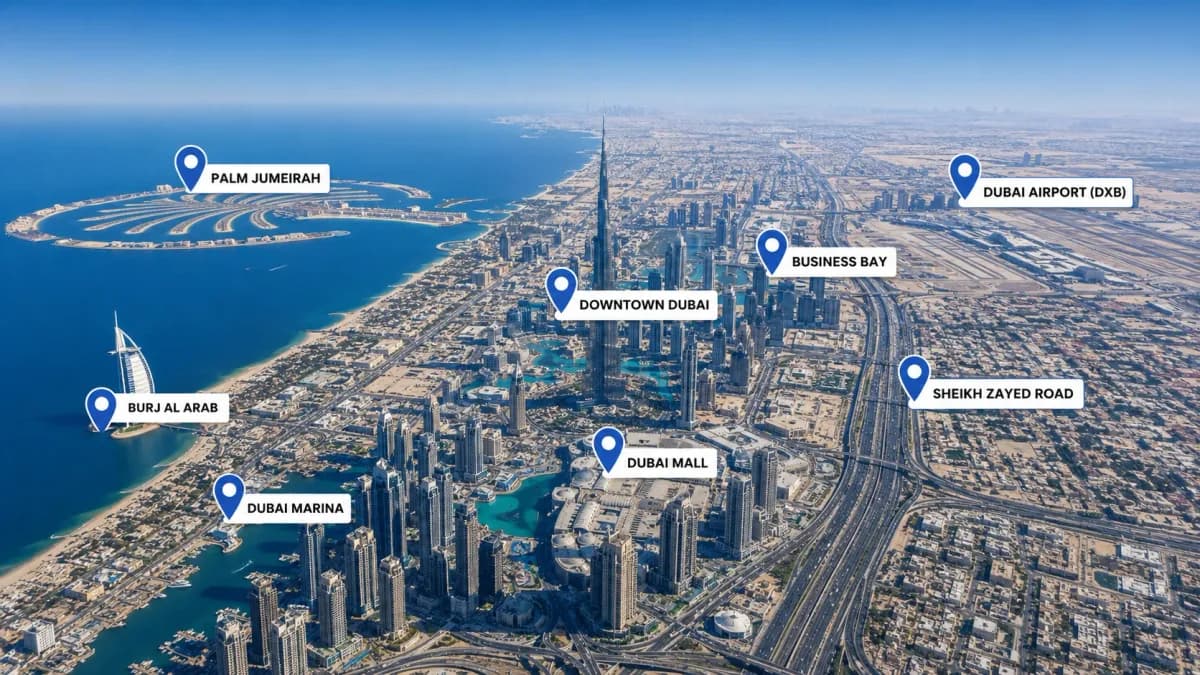
Sheikh Zayed Road is one of the strongest locations for mass awareness and premium visibility. It works well for large campaigns that need scale, especially real estate, luxury, automotive, finance, tourism and major brand launches.
Downtown Dubai is valuable for tourism, retail, hospitality, luxury and entertainment because it attracts residents, visitors and high-spending audiences. Dubai Marina and JBR are strong for lifestyle, dining, beach clubs, tourism, fitness, fashion and leisure campaigns. Palm Jumeirah is useful for luxury hospitality, premium real estate, wellness, fine dining and high-end experiences.
Business Bay and DIFC are strong for B2B, finance, property, technology and professional services. Dubai International Airport is powerful for brands targeting travellers, tourists, investors, business leaders and international audiences.
Malls such as Dubai Mall and Mall of the Emirates offer strong dwell time and spending intent. Residential communities can help brands reach families and local consumers. Transport routes and taxi media can extend visibility across multiple parts of the city.
The best location depends on what the campaign needs to achieve.
Static and Digital Locations Work Differently
Static and digital outdoor formats both have value, but location affects them in different ways.
Static billboards, bridge banners and lampposts are excellent for consistent exposure. They work well when a brand wants the same message to be seen repeatedly over a campaign period. This is useful for brand awareness, project launches, event promotion and local domination.
Digital Out of Home, or DOOH, adds flexibility. Digital screens can rotate creatives, show motion, change messages by time of day and support more dynamic storytelling. This is useful for campaigns with multiple messages, seasonal offers, event countdowns or time-sensitive calls to action.
pDOOH can make location planning even more targeted by combining outdoor visibility with data-led scheduling and delivery. Brands can use it to reach audiences more efficiently across selected screens and moments.
The best choice depends on the objective. If a brand needs long-term consistency, static may be ideal. If it needs flexible messaging, digital may be stronger. If it needs both scale and adaptability, a mixed plan can work well.
Creative Should Be Built for the Location
The same creative should not be used everywhere without thought. A billboard on a fast road needs different treatment from a mall screen, airport display, taxi wrap or lamppost.
For fast-moving traffic, the creative should have a short headline, bold visual, large logo and very little text. For malls and airports, where people have more time, the creative can include a clearer call to action, QR code or more product detail. For taxis and buses, the message must work from different angles and distances. For lampposts, consistency across multiple faces matters because the campaign builds through repetition.
Location should guide the design.
This does not mean changing the brand identity. The campaign should still feel consistent across formats. But the layout, copy length, call to action and visual hierarchy should adapt to the viewing environment.
A good outdoor campaign is not just designed beautifully. It is designed for where it will live.
Location Improves Outdoor and Digital Together
Outdoor advertising often works best when it supports digital marketing. A person may see a billboard, then search the brand later. They may notice a taxi ad, then visit the website. They may scan a QR code in a mall. They may see an airport campaign and later receive a digital ad with the same message.
Location helps shape this journey.
For example, a real estate developer can use outdoor media near premium districts, then support the campaign with search ads and retargeting. A restaurant can advertise near office areas and run mobile offers nearby. A retail brand can use mall media and push online promotions. A tourism brand can advertise near hotels and attractions, then direct users to booking pages.
The outdoor placement creates real-world awareness. Digital media then captures interest and action.
When the location, creative and digital follow-up all connect, the campaign becomes stronger.
Measuring Location-Based Performance
Outdoor advertising can be measured in several ways, depending on the goal. A brand can track website traffic, search uplift, QR scans, promo code use, calls, enquiries, app downloads, store visits, sales centre visits, social engagement and brand recall.
Location plays a major role in how these results should be judged.
A billboard campaign on a major road may be measured through reach, recall and search uplift. A mall placement may be measured through footfall, QR scans, purchases or store visits. A real estate hoarding may be judged by enquiries and sales centre traffic. A taxi campaign may be measured through citywide reach, brand visibility and online response. A DOOH campaign may include delivery reports and performance by screen, timing or area.
Before the campaign starts, brands should decide what success looks like. The media location, creative and call to action should all support that objective.
A campaign built for awareness should not be judged only by instant sales. A campaign built for footfall should not be placed too far away from the action. The measurement should match the location strategy.
How Dubai Advertising Helps Brands Choose Smarter Locations
Choosing the right outdoor advertising location in Dubai requires more than picking a busy road. Brands need to understand audience movement, visibility, dwell time, format strength, campaign timing, creative requirements and local context.
Dubai Advertising helps brands advertise across Dubai through billboards, building wraps, taxi advertising, bus advertising, MUPIs, lampposts, bridge banners, malls, DOOH, airports and more. Whether the goal is brand awareness, premium positioning, lead generation, footfall, tourism visibility or local market dominance, the right location plan can make every dirham work harder.
You can explore available formats, review previous campaigns on our work, browse helpful planning resources in the academy, or speak directly with the team through the contact page.
In outdoor advertising, being visible is good. Being visible in the right place is what drives performance.
FAQs
Q1. Why does location matter in outdoor advertising?
Location matters because it determines who sees your ad, how often they see it, how much time they have to understand it and whether the message feels relevant to their situation.
Q2. What locations work best for outdoor advertising in Dubai?
Strong locations include Sheikh Zayed Road, Downtown Dubai, Dubai Marina, JBR, Palm Jumeirah, Business Bay, DIFC, Dubai International Airport, major malls, residential communities and tourist routes.
Q3. Is high traffic always the best choice for outdoor ads?
Not always. High traffic helps, but the location must also have clear visibility, good audience relevance, suitable dwell time and strong viewing angles. A smaller targeted location can sometimes perform better.
Q4. How does location affect billboard advertising?
Location affects Billboard advertising by shaping visibility, recall, audience quality and brand perception. A billboard in the right place can make a campaign feel more credible, relevant and memorable.
Q5. Can Dubai Advertising help select the best OOH locations?
Yes. Dubai Advertising can help brands choose suitable outdoor locations across billboards, building wraps, taxis, buses, MUPIs, lampposts, bridge banners, malls, DOOH, airports and other formats across Dubai.
Ready to Put Your Brand in the Right Place?
A strong outdoor campaign starts with smart location planning. Whether you want to reach commuters, tourists, shoppers, families, business professionals or premium audiences, Dubai Advertising can help you choose the right formats and locations across Dubai.
Contact Dubai Advertising today and let’s plan an outdoor advertising campaign that gets your brand seen, remembered and acted on.
Get a Tailored Quote Now to Launch Your Outdoor Campaign!
Your audience is out there, on roads, at airports and across screens. Every moment of delay is a moment of lost visibility. So, why wait? Request a personalised quote now to plan and roll out your OOH advertising Dubai campaign at full speed.
We craft a bespoke strategy that delivers maximum impact across the city's most strategic locations. From concept to execution, Dubai Advertising gets your campaign up and running faster than ever.